An NFL Owner Wants to Know What YOU Think!

625578_10151958944664581_391510612_n

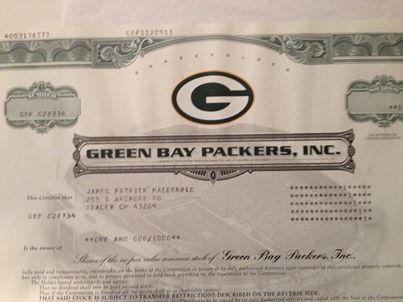
My wife suspects I’m more proud of this piece of paper
than I am of my M.D. diploma…….

I had an enjoyable weekend, and I hope you all did as well.  Friday night I was on the sidelines covering an American football game which extended into the late hours because of an extended lightning delay, but after that I had my first relatively free weekend in a while.

jimpackers

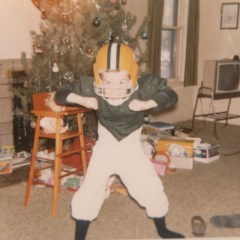
The author, circa 1968,
in vintage Packers gear.
There’s a reason he went
into sports medicine rather
than football.


I don’t think I’ve ever shared my bona fides with the readership, but besides being a licensed physician I am, ahem, an owner of a professional sport team*:  the Green Bay Packers,   It was with pride that I attended their game on Sunday…..but it was with sadness that I drove away from the stadium, ‘my’ team having snatched defeat from the jaws of victory.

Humor aside, it was with real sadness that I wrapped up my weekend, as I caught up with the Sunday newspaper late last night on my return from the game.  I came across this headline:  ‘Auto Accident Claims Life of Football Student-Athlete, Three Others Injured.’

I had just blogged about the new study published ahead of print in CJSM on the subject of motor vehicle accidents in collegiate athletes:  they are the number one cause of death in this population.

I haven’t posted a poll in the blog or on the CJSM main website in a while, and so I thought it was time to do so using this blog post and the study, ‘Motor Vehicle Accidents, the Leading Cause of Death in Collegiate Athletes.’

Bart_Starr_-_Green_Bay_Packers

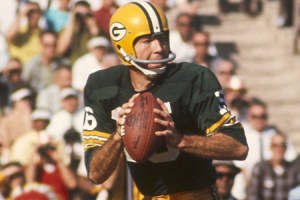
Here’s what a REAL Packer looks like:
the Hall of Famer, Bart Starr

Without further adieu, then, take a moment now and test your knowledge (hint:  answer is both in the blog post and the study itself; but I’ll also post the answer with in my next blog piece).

*one of 364, 122 shareholders of the Packers as of this writing! Roman Abramovich I am not!

Motor Vehicle Accidents: The Leading Cause of Death in Collegiate Athletes

Car_crash_2

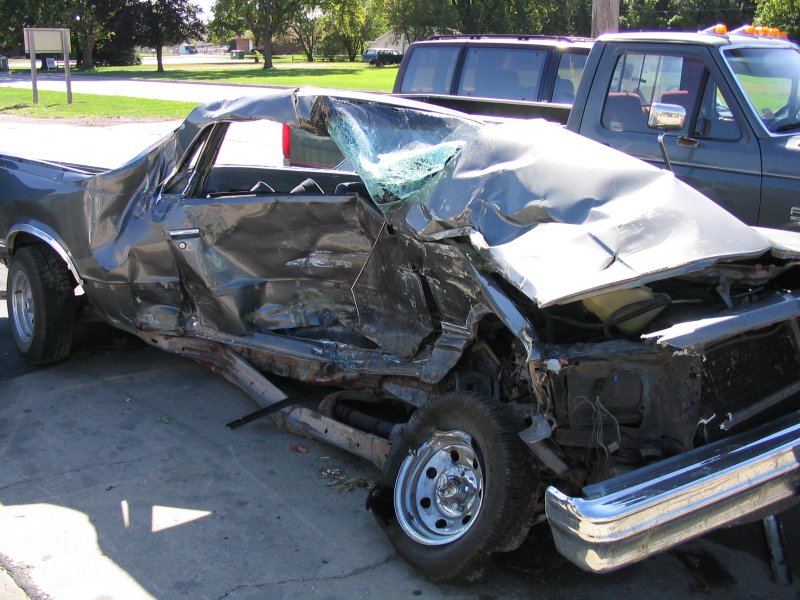
Motor Vehicle Accidents: the number one
killer of NCAA athletes

The title of today’s post is striking.

In sports medicine we focus–rightly–on entities such as sudden cardiac death, cervical spine injuries, second impact syndrome, exertional heat illness, hyponatremia……There  is a long list of conditions that can befall athletes which can cause serious mortality and morbidity.

But from a public health perspective, our priorities are possibly misplaced. At the very least I wonder sometimes if we may ‘strain at a gnat and swallow the camel‘ when we focus intensely on chest protectors and commotio cordis and say nothing about the use of seat belts in our athletes.

In August CJSM published ‘ahead of print’  “Motor Vehicle Accidents:  the Leading Cause of Death in Collegiate Athletes,” a study authored by I Asif, K Harmon, and D Klossner, authors who have published other epidemiologic work on sudden death in young athletes.  The data presented gave me pause. For all our concern about sudden death from hypertrophic cardiomyopathy,  to name one example, the data show that far and away the greatest threat to the young athletes under our care are accidents or unintentional injury.

The authors conducted a 5 year retrospective analysis using two data bases:  an NCAA database, and the “Parent Heart Watch” database.  This second database has an interesting history: a non profit group which began tracking sudden cardiac death in American athletes in 2000.   Various death rates were calculated, notably: 1) an overall death rate for athletes was found to be 13.86/100,000 athlete-years; 2) a death rate from accidents of 7.36/100,000 athlete-years; 3) a death rate from cardiac causes of 2.28/100,000 athlete-years; 4) a death rate due to accidents found highest in the sport of division I wrestlers, with a rate of 28.2/100,000 athlete-years.   Deaths from unintentional injuries occur at “….nearly twice the rate of all medical causes of death combined,” the authors note. Read more of this post

William P. Meehan III, M.D. guests on “5 questions with CJSM”

bill m stanley cup

Bill Meehan & The Stanley Cup
One of the few awards he has
not garnered in his career.

Readers of the blog will remember in August I was able to interview Dr. Jason Mihalik, University of North Carolina, about his work while using the ‘5 questions with CJSM’ format.  I’m happy to say I have another willing victim for this format.

I have known William P. Meehan III, M.D. for several years; we both did our sports medicine training in Boston under the illustrious doctors Lyle Micheli, M.D. and Pierre d’Hemecourt, M.D., authors whose names will be familiar to readers of the journal as they have both been published in CJSM numerous times.

Bill, as I know him, is likewise establishing his own enviable track record in the clinical management and study of sport-related concussions.    I have mentioned some of the work he has done in a recent blog post, and so in the spirit of brevity let’s get right to the interview.

_______________________________________________________________________

Five Questions with CJSM

WM:  Thanks so much for inviting me to be part of your blog, Jim.  You do great work here at the Clinical Journal Sports Medicine I appreciate your including me.

1)    CJSM:  Thanks for those kind words Bill, and congratulations on your receipt of the first AMSSM-ACSM Foundation’s Clinical Research Grant for your project titled “A Randomized, Double-Blind, Placebo-Controlled Trial of Transcranial Light Emitting Diode Therapy for the Treatment of Chronic Concussive Brain Injury.”  Can you tell us what potential you see for LED therapy in this arena

WM:  The idea of using light emitting diodes (LEDs) to treat concussive brain injury was brought to my attention by Margaret Naeser, PhD, who works at the VA Boston Healthcare System and Boston University School of Medicine. Dr. Naeser approached me one day after a lecture and suggested that perhaps LED therapy could help people suffering from concussive brain injury. To be honest, I was a bit skeptical at first. But she was passionate and convincing about it.  After reading some of the previous medical and scientific literature about light therapy, my mentor in the laboratory, Michael Whalen, MD at Massachusetts General Hospital conducted some experiments on mice that had suffered a traumatic brain injury.  The results were promising.  So the three of us, together with Rebekah Mannix, MD, MPH, Alex Taylor, PsyD, and Ross Zafonte, DO set out to conduct the study.

As you know, the current hypothesis of concussion is that a rapid rotational acceleration of the brain leads to changes in the ionic gradients across the axonal membrane. Those ionic gradients are restored to homeostasis by the action of the sodium-potassium pump. The sodium-potassium pump operates on adenosine triphosphate (ATP). It turns out that light in the red and near infrared spectrum when applied to cells in culture increases the activity of cytochrome C oxidase. This results in further ATP synthesis. Thus, some very astute researchers hypothesized that shining light in the red/near infrared spectrum on the brain would result in an increase in ATP production and perhaps decrease the healing times after certain brain injuries, including traumatic brain injury.

Dr. Whalen was nice enough to conduct an experiment in his laboratory using mice that had sustained brain injuries when we first heard about this.  Those experiments showed that treatment with laser in the red/near infrared spectrum resulted in better outcomes on measures of cognitive functioning, specifically the Morris water maze. After considering all of the evidence I followed up with Dr. Naeser. She informed me that she had an ongoing trial of light emitting diode therapy for people suffering from chronic traumatic brain injury. She had also published a case series of two patients who sustained concussions during motor vehicle collisions, athletic participation, and military service, who showed improvements of their cognitive functions after LED therapy. So we decided to conduct a randomized, double-blinded, placebo-controlled trial of LED as treatment for concussion.  Thus far, we have recruited half of our estimated sample size of 48 patients.

2) CJSM:  Congratulations as well for becoming Director for the Micheli Center.  If you had to compose a 140 character tweet to tell the world about the work you expect to accomplish there, what would it say?

WM:  Thank you.  I was delighted to become director of the Micheli Center for Sports Injury Prevention. We believe we are the first center in the world where athletes can come and learn which injuries they are at highest risk of sustaining, and what steps they can take to reduce the risk of those injuries.  The full Injury Prevention Evaluation takes about 3-3.5 hours.  It starts by collecting historical information, such as what sports the athletes play, what injuries the athletes have previously suffered, how many hours per week the athletes train, etc.   Then the athletes move out to the assessment floor where we measure bony angles, flexibility at the joints, strength in various muscle groups, speed, power, agility, and many other factors that are associated with the risk of injury.  The full evaluation includes over 300 data points, all based on the available medical and scientific evidence.  At the end of the evaluation, athletes are given a list of the injuries for which they are at highest risk, and an individualized prescription that outlines the steps they can take to reduce their risk of sustaining those injuries.

Our goal is to encourage safe participation in athletics while simultaneously decreasing the risk of injuries sustained during sports.

Although I don’t have twitter account, if I had to put out a 140 character tweet to the world I would say, “Our goal is to reduce the risk of sustaining sports injuries while simultaneously encouraging athletic participation.”

(CJSM:  21 characters to spare with that tweet!  Hey, Bill, with a name like yours, you can imitate RG3 and see if the twitter handle WM3 is available.  You can make the Micheli Center go viral!) Read more of this post
Exertional Rhabdomyolysis

I hope the blog readership has had a chance to take a look at the most recent issue of CJSM.  The September 2013 edition of the Journal has studies looking at conditions from concussion to osteoporosis and at sports from football to ballet.  It is a varied mix, and a testament to the wide range of conditions primary care sports clinicians treat and study.

Nile_Kinnick

The great Nile Kinnick,
University of Iowa
1939 Heisman trophy winner,
World War II hero

I spent a good amount of time in August talking about concussions, and I could easily continue this thread throughout September.  I started off the month, in fact, with a look at my friend Bill Meehan’s recent work on the “The Presence of Undiagnosed Concussions in Athletes.”  I thought I’d take a break from that topic, and look at a less common but also potentially dangerous condition:  exertional rhabdomyolysis.  It’s a particularly relevant topic at this moment, as exertional rhabdo often times strikes untrained athletes working out in hot and humid environmental conditions, and it’s an unseasonable 95 in Columbus Ohio today, where I am writing this post.

A Cluster of Rhabdomyolysis Affecting a Division I Football Team,” a study by Smoot, MK, Amendola, A, Cramer, E et al., looks at an ‘outbreak’ of the condition in January 2011 at the University of Iowa’s football (american) team after some intense off-season lifting workouts.  Ironically, we had a cluster of our own in Columbus, Ohio, home to Iowa’s Big Ten rival Ohio State, just this spring, in the women’s sport of lacrosse.  The LAX players were hospitalized after team members performed a new 20 minute workout involving repetitive pushups, situps and chin ups, without break.  Six female athletes were hospitalized for as much as a week.  The local newspaper reported,  “Five returned to play last season, all except sophomore Kelly Becker of Dublin…..who has since transferred to Michigan.”

mo squared at michigan

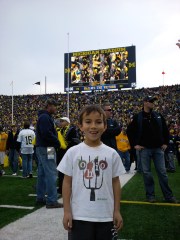
The author’s son,
letting it all hang out
in the ‘Big House’
Ann Arbor, MI

Ok, stop!!  If that doesn’t suggest to you the gravity of the situation, nothing will.  As a consequence of her experience as an athlete who developed exertional rhabdo, a young woman traded in being a Buckeye for a Wolverine.  The ultimate protest!!!!

Returning to the study…..The authors set out to look for what might be risk factors for exertional rhabdo (ER) in collegiate football players.  They begin by doing a brief and excellent overview of the signs and symptoms, defining characteristics, and known risk factors for ER.  They proceed then to describe the workout the 16 football players did (e.g. 100 back squats at 50% of one rep maximum) and how the young men presented with ER.  Thirteen players were hospitalized for ER after this workout.

The authors were given permission to look at the medical records of 10 of the 13 cases. Nine of the 10 had urine screens negative for drugs (one had a positive opiate screen, but his urine had been collected after being administered narcotic analgesics); one of the 10 had sickle cell trait; and two of the 10 had consumed creatine before the workout.

Read more of this post