Nadal’s Knees

715px-AFONSONADAL

Rafael Nadal, invincible on clay, just might be beaten by this man in table tennis (Portuguese Table Tennis Coach Afonso Vilela)

What a great week it has been at the French Open in Paris.  As I write, I see that Serena Williams has just closed out Maria Sharapova in straight sets to regain the title she last held 11 years ago in 2002.  The men’s final is set for tomorrow, with the incomparable Rafael Nadal facing his Spanish countryman David Ferrer after outlasting Novak Djokovic in an epic five-set semi-final match.

Like many of this blog’s readers, I have been amazed and entertained by men’s tennis over the last decade.  It truly is a golden era for the sport, with Federer and Nadal and Djokovic and Murray each seeming to outdo the other in feats of tennis heroics.  Just yesterday Nadal made an amazing between the legs shot in the fifth set, but is that perhaps outdone by the amazing forehand Djoko ripped off Federer to save match point in the 2011 U.S. Open (going on then to win the semi-final)?

Read more of this post

PRP – magic bullet, or damp squib?

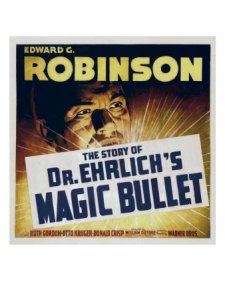
I’m guessing that not many of you will have seen the Academy Award-nominated biographical movie ‘Dr Ehrlich’s Magic Bullet’ starring Edward G Robinson. It outlines part of the career of the famous German scientist  Dr Paul Ehrlich, who popularised the concept of the ‘magic bullet’ therapy for the treatment of specific diseases. The film focuses on arsphenamine, ‘compound 606,’ and Ehrlich’s cure for syphylis.

The concept of the ‘magic bullet’ is rather older however, dating back at least to the 1800’s and deriving from the histochemical staining of tissues. It was Ehrlich’s opinion that, if a chemical could be found that targeted a pathogen, then a toxin could be delivered along with that chemical and hence a ‘magic bullet’ would be created that would destroy the pathogen leading to the elimination of a disease state. The concept was later realised following the discovery of monoclonal antibodies for which Köhler, Milstein and Jerne shared a Nobel Prize in 1984.

So-called ‘targeted therapies’ do not necessarily destroy their target as such, but may act to cause some form of modification, for example to a cell membrane via second messenger cascades or within the cell nucleus itself, leading to alterations in cellular genetic expression which then lead to a sequence of events that ultimately results in healing or an improvement in clinical symptoms.

Platelet-rich plasma (PRP) has been perhaps the most widely investigated preparation of late. PRP contains a number of growth factors including PDGF, IL-8, and CTGF, which have a number of different effects on different cells. Many of these actions are poorly understood, despite much basic science research, yet this has not prevented the clinical application of PRP for tendinopathies which is perhaps not surprising given the search for effective therapies for tendinopathies and the drive for ‘cutting-edge’ therapies in Sports Medicine.

However, when one stops to consider the knowledge gaps we have concerning the pathophysiology of tendinopathies, and our lack of understanding of the complex interactions involved in cellular healing mechanisms, then perhaps one may not be surprised to see the heterogeneity of results from clinical trials using PRP in the treatment of these conditions. The three main theories for the genesis of tendinopathy, namely overuse, overload and thermal stress, are still open to debate and there is a very wide range of possible actions of PRP on tendinopathic tendons.

Well-conducted clinical trials such as this one by de Jong et al on PRP for achilles tendinopathy, and systematic reviews such as this one by de Vos and colleagues ,have failed to find a positive clinical effect when using PRP use for the treatment of tendinopathies.

In this month’s systematic review in CJSM on the use of PRP in Sports Medicine as a new treatment for tendon and ligament injuries, Taylor and colleagues concluded that, despite several possible theoretical advantages to the use of PRP, there are very few well-conducted prospective studies and clinical trials available with which to inform clinical practice.

The recent IOC consensus paper on the use of PRP in sports medicine published in BJSM also highlighted the limited amount of basic science research, the paucity of well-conducted clinical studies on PRP, and the heterogeneity of methodological issues between different studies making comparisons of clinical effects difficult to judge. The IOC group’s recommendation was that clinicans should proceed with caution in the clinical use of PRP.

The debate is on as to whether there is a true lack of efficacy of PRP in the treatment of tendinopathies, or whether we simply need more well-designed clinical research.

What do you think? Where do we need to focus our research efforts? Should we forget the idea of ‘targeted therapies’ such as PRP and ‘magic bullets’ for tendinopathies?

CJSM would like to hear your views.

Leave a Comment

Leave a Comment

Anyone for Tennis? Wimbledon Championships in full swing

And so to the gloriously British Grand Slam Premier Tennis event that is Wimbledon which is currently in full swing. Well – full swing insomuch as the British weather is currently allowing, but at least with the Centre Court’s retractable roof, installed in time for the 2009 Championships, we are guaranteed to get through at least some of the scheduled games every day. As I write in London not more than a few miles away from the courts, the rain is currently pouring down – a not so welcome tradition of the Championships, together with the more desirable traditions such as strawberries and cream, ‘Henman Hill,’ and the inevitable tireless British banter about why we haven’t managed to produce a Men’s Champion since the legendary Fred Perry way back in 1936 when he won for a third time.

A total of 128 players take part over the fortnight in the single tournaments, with 64 pairs in single-sex doubles and 48 couples in the mixed doubles. However, there are always a few high-profile players who don’t make it to the Championships because of injury. A quick look at the injury statistics reveals some of the big names you won’t be seeing this year including number 2 seed and current US and Australian Open Champion Kim Clijsters, Juan Carlos Ferrero, Sam Querry and Benjamin Becker. The good news is that current Ladies Champion, Serena Williams, is back to defend her crown after all of her well documented medical problems following a foot laceration on glass sustained in a restaurant.

Speaking of tennis, the BMJ recently published a review article by Orchard and Kountouris on the management of tennis elbow, perhaps better termed lateral elbow pain. Included in the online article is some useful video footage showing eccentric wrist extensor exercises, together with a discussion of the anatomy, pathophysiology and treatment options including some of the recently introduced therapies such as platelet-rich plasma. Interestingly, however, there is little mention of the efficacy of topical NSAIDS in the short term management as highlighted in the useful Clinical Knowledge Summary of the condition on the NHS Evidence website here. Given that these are widely available as over-the-counter preparations, I have always found them a cheap and useful ‘starter for ten’ in combination with ice, activity modification, paracetamol and eccentric exercises.

It seems that the effectiveness of surgery for the condition is still in some doubt according to the recently-updated Cochrane review on surgery for persistent lateral elbow pain. Their review included 5 trials of 191 participants with symptoms of at least 5 months’ duration and failed conservative treatment, and concluded that it was difficult to draw conclusions from the results of the trials due to issues of heterogeneity of interventions, small sample sizes and poor reporting of outcomes. Perhaps it is a blessing that much of the misery of the condition seems to resolve regardless of intervention between 6-12 months following the onset of symptoms.

Some useful CJSM articles on the topic of lateral elbow pain can be found below. Enjoy the tennis!

Hart, Lawrence MB. Short- and Long-Term Improvement in Lateral Epicondylitis. November 2007 – Volume 17 – Issue 6 – pp 513-514

Chung, B, Wiley, J, Preston MPE, Rose, M S. Long-Term Effectiveness of Extracorporeal Shockwave Therapy in the Treatment of Previously Untreated Lateral Epicondylitis. September 2005 – Volume 15 – Issue 5 – pp 305-312

Lebrun, C. Shock-Wave Treatment for Chronic Lateral Epicondylitis in Recreational Tennis Players. May 2005 – Volume 15 – Issue 3 – pp 198-199

Newcomer, Karen L. MD; Laskowski, Edward R. MD; Idank, David M. DO; McLean, Timothy J. RPT; Egan, Kathleen S. PhM. Corticosteroid Injection in Early Treatment of Lateral Epicondylitis. October 2001 – Volume 11 – Issue 4 – pp 214-222

Burnham, Robert,  Gregg, Randy, Healy, Pam,  Steadward, Robert. The Effectiveness of Topical Diclofenac for Lateral Epicondylitis. April 1998 – Volume 8 – Issue 2 – pp 78 – 81

Waskowitz, Robert S. M.D.; Hawkins, Richard J. M.D. 1996. Local Corticosteroid Injection Versus Cyriax-Type Physiotherapy for Tennis Elbow. October 1996 – Volume 6 – Issue 4 – ppg 276