Dr. Lyle Micheli

IMG_1133

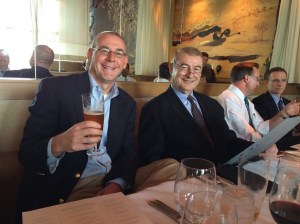
Dr. Lyle Micheli (R): The Godfather of Sports Medicine? Dr. Kevin Klingele (L) is inclined to agree

Jamesbrown4

The undisputed ‘Godfather of Soul’: James Brown Picture: Dbking @ Flickr

If there is a ‘Godfather of Soul’ is there a ‘Godfather of Sports Medicine’?

I think there may be……..and I’m very lucky to have trained under him.

Speaking as an editor of a clinical journal, I am aware of the phenomenon of bias, and I would acknowledge at least one ‘limitation’ of this blog post is that I am guilty of selection bias.

In truth, however, there could be a very strong case made for Dr. Lyle J. Micheli‘s candidacy for that mythical title.  One argument for the (perhaps) uncanny resemblance between the two ‘Godfathers’ is Mr. James Brown’s nickname:  “The Hardest Working Man in Show Business.”  No doubt, if there were a “Hardest Working Man” in Sports Medicine, the award would be given to Dr. Lyle Micheli:  even still, at age 70+, it is rumored that he performs more surgeries than any other orthopedist in the New England region of USA.  This is a man who works six days a week, and on the seventh…..well, unlike God, Dr. Micheli doesn’t rest:  he writes. Research Manuscripts.

At CJSM, we have been the recipient of several of his studies that have made the peer review grade and been published.  They span a period from 1992 (Arthroscopic Evaluation and Treatment of Internal Derangements of the Knee in Patients Older than 60 Years) to 2015 (A Closer Look at Overuse Injuries in the Pediatric Athlete).  Recognize that CJSM itself is celebrating its 25th year, and so, in essence, Dr. Micheli has been publishing in our journal for as long as we have been in existence.

His career goes back farther, into those dim reaches of the sports medicine universe that precede the Big Bang, er, the birth of CJSM in 1990.  His career in sports medicine dates back to the 60’s.  He was treating athletes before Jim Fixx gave birth to a  running boom in the United States.  Put another way, he was Medical Director of the Boston Marathon when Americans were still winning the thing…..and he is still at the Finish Line: in 2015 and in the infamous 2013 Marathon about which I have written in this blog.

He is currently visiting here in Columbus, Ohio, ready to give Grand Rounds on ‘Spinal Injuries in Young Athletes,’ and it’s great to see him.  We’ll be doing a podcast together, and I plan on sharing a link to that on our CJSM Social Media.

For now, let me end this encomium with one last parallel between the two Godfathers.  Sure, James Brown was prolific:  over his career he produced how many hits? married how many times (4)? had how many children (6)?  Dr. Micheli?  Well, let’s just say he has ‘given birth’ to many sports medicine children, who continue to follow his path in the field of sports medicine practice and research:  Meehan, Stracciolini, d’Hemecourt, Luke, Loud.…even myself.  And so many, many more!   There are seemingly untold disciples spread across the globe continuing his example of hard work and research productivity. Micheli?  Prolific? Oh my, yes.

He’d be the first to say, however, that it’s all about evidence-based (not eminence-based medicine), and so I hear his voice in my conscience, telling me to stop this now!  And get to doing some real work:  run a regression, do those edits on the manuscript that is due, figure out the solution to a problem in the athletes you care for!

Besides, the day has passed, it’s the middle of the night, and I hear the Chimes of Midnight……Grand Rounds is less than 6 hours from now.  Good night!!!!!

CJSM Podcast 7: Chris Nowinski

jsm-podcast-bg-1Our second podcast of the year focuses on the on-going sport ‘concussion crisis,’ a topic we have explored in previous podcasts with guests such as Drs. Cindy Chang and Matt Gammons of the American Medical Society for Sports Medicine (AMSSM) and Drs. Oliver Leslie and Neil Craton of the Canadian Academy of Sport and Exercise Medicine (CASEM/ACMSE).

030

Chris Nowinski

We’re happy to have Chris Nowinski as our guest for this podcast.  He is the author of Head Games, the co-founder and chief executive officer of the Sports Legacy Institute, and a published author in the pages of the Clinical Journal of Sport Medicine.

Our conversation ranged from the issues of underreporting of brain injury in sport to the use of helmet sensors in helmeted sports to identify possible concussive and sub-concussive hits; from youth football to elite soccer, and more.

We appreciate the time Chris gave us from his busy schedule, and we hope you enjoy the conversation.  Share with us your comments–here on the blog or on our twitter feed, @cjsmonline.

Enjoy!

“The Trouble with Kids”: Overuse Injuries and Burnout in Youth Sports

We’re winding down 2014 and already looking forward to the January 2015 issue, which is packed with important papers including two American Medical Society for Sports Medicine (AMSSM) Consensus Statements.  We’re the official journal of the AMSSM and we’re always excited to publish one of their well-researched statements.

2014 opened, in fact, with an AMSSM consensus statement:  “Overuse Injuries and Burnout in Youth Sports:  A Position Statement from the AMSSM.”  It is our third most viewed study this year at cjsportmed.com.  We caught up with the lead author, John DiFiori, past-president of AMSSM, in one our 5 questions with CJSM interviews in a January 2014 blog post.  Sit down with a cup of egg nog and take a look at those links for some real holiday pleasure!

I know in my own practice of pediatric sports medicine I’ve referred frequently to what I’ve learned from this position statement.  I ‘channel it’ frequently when I’m talking with one of my patients (and parents) about the prevention and treatment of little league elbow in a pitcher or spondylolysis in a gymnast……And I certainly used a great deal of that study in my preparation for delivering a talk at the national youth athletic summit sponsored by MomsTeam in Boston in September:  “SmartTeams Play Safe.”a33c5a4a7e63600ecb112e79412060dda8baa293

I’m reposting my blog post review of that 2014 consensus statement below.  Enjoy, and get ready for a great 2015!  We’ll begin with a bang:  a podcast with the lead author of a new AMSSM consensus statement, and more.

Happy Holidays!

sportingjim's avatarClinical Journal of Sport Medicine Blog

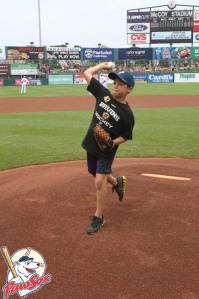
Pawsox_17937_2013-06-30 10,000 hours of practice, and
he might make the Red Sox?*

We’re very pleased at CJSM to open the New Year with a shout:  a fantastic systematic review and position statement on the subject of youth sport, from the American Medical Society for Sports Medicine (AMSSM).

The focus of the paper–in the January 2014 issue, which has just published–is on overuse injuries, which are thought to represent roughly half of all the injuries youth athletes sustain.

All readers of the journal, and of this blog, will find this a worthwhile read.  I have a selfish interest in the subject, as I am currently practicing pediatric sports medicine, and in my professional life I live and breathe the issues discussed in the paper. Moreover, I know several of the authors of this paper, and I think highly of them all.

But this is not about ’eminence based’ medicine. …

View original post 770 more words

The Most Dangerous Sport in the World?

Bull_Tamer

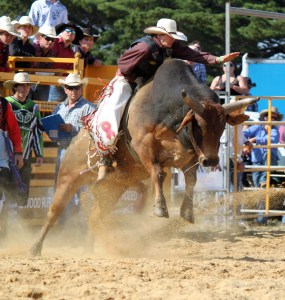
A Bull Tamer in Australian Rodeo Event. Photo: Amcilrick

TheByrdsSweetheartoftheRodeo

“Sweetheart of the Rodeo”

I’ll confess I don’t know much about rodeo.  To the extent the word triggers a response in my mind, I think of Gram Parsons and the Byrds:  “Sweetheart of the Rodeo.” Click on the link and take a listen:  it’s a great album!

Back to sport….it’s my own cultural myopia that overlooks rodeo when I think of the word ‘sport.’ I didn’t grow up participating in it, and in central Ohio I have not attended to any rodeo injuries (equestrian, yes; bull riding, no). I imagine my situation would be different if I practiced in Wyoming or Alberta…..or parts of Mexico, Argentina, and Australia (rodeo is truly international).

As I grow older, I delight in learning more about other sports; my involvement with CJSM certainly has expanded my horizons. Last year, for instance, I wrote (and learned) about the ice sport of ringette after the journal published a study on the injury epidemiology of this largely Canadian activity. I had previously never heard of rignette. Shame on me.

I was reading the New Yorker earlier this week when I came across this tantalizing entry: “The Ride of Their Lives: Children Prepare for the World’s Most Dangerous Organized Sport.”  The focus of the article is a particular event in rodeo, bull riding, and the kids and families who participate in this sport….which is, indeed, very dangerous.   “It’s not if you’re gonna get hurt; it’s when,” one parent is quoted.  As a pediatric sports medicine physician, I was bound to be hooked.

I was delighted to see the New Yorker author use the work of Dale Butterwick as one of his chief sources for the article’s epidemiologic data. Mr. Butterwick is a faculty member of the University of Calgary, Alberta, and has written extensively on injury patterns in rodeo.  Among his more important works is the CJSM 2011 study, “Rodeo Catastrophic Injuries and Registry:  Initial Retrospective and Prospective Report,” which reported on 20 years of data collected by the only, international registry for catastrophic injury in rodeo, which he maintains. Read more of this post