The AMSSM Position Statement on Conducting the PPE During the SARS-CoV-2 Pandemic

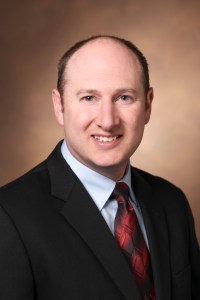
Dr. Alex B. Diamond, co-author of the recent AMSSM guidance statement on administering the PPE during the COVID pandemic

If you’re like us, we are ready to turn the page on 2020!

Literally and figuratively in CJSM’s case.

We’ve decided to push out the January 2021 issue early to get a start on the New Year!  And we’ve got our first podcast of the, ahem, ‘New Year’ to go along with it.

There are many submissions in this edition to highlight, but today I wanted to bring to the attention of the blog readers and podcast listeners one in particular.

CJSM’s partner society, the American Medical Society for Sports Medicine (AMSSM) convened a writing group early in 2020 to give guidance to clinicians in conducting the pre-participation examination (PPE) during the SARS-Cov-2 pandemic.  The result is a manuscript entitled, “Interim Guidance on the Preparticipation Physical Examination for Athletes During the SARS-CoV-2 Pandemic.”

The pandemic has touched all aspects of our field, and the PPE poses some new challenges that clinicians must address while the SARS virus holds sway.

Co-chair of the AMSSM committee and co-author of the AMSSM statement, Alex B. Diamond, D.O., M.P.H. is our guest on the first podcast of the new year.  The other co-chair was Dusty Narducci, M.D. Drs. Diamond and Narducci headed an illustrious team of authors, many whose names will be recognizable to those in the world of sports medicine (special shout out to two of our CJSM editors on the panel: Dr. William Roberts and Dr. Jason Zaremski).

Dr. Diamond is an Associate Professor in the Departments of Orthopaedics and Pediatrics at Vanderbilt University Medical Center, and among many other positions is also the team physician for several Nashville- area high schools, Vanderbilt University (NCAA D1) and the Nashville Predators of the NHL.

In our conversation we do a deep dive on conducting the PPE during the pandemic.  We cover issues such as venue (medical home vs. mass event), the risk of myocarditis in infected individuals, and the potential barriers to sport access created by the PPE.

Go to the statement, which is now freely available in our January 2021 issue. And go to iTunes to check out this episode and subscribe to all of our podcasts, or go to the journal’s main website to access the podcast and other CJSM media.

CJSM Podcast with Dr. William Meehan — long-term quality-of-life benefits for collegiate female athletes

Dr. William Meehan (R) and yours truly (L) in that oh so 2020 virtual space

CJSM’s November 2020 issue — the last of this unprecedented calendar year — contains many many interesting research studies.

One of the studies was the subject of our most recent blog post journal club.

I enjoyed that submission so much that I thought I would ‘ring’ the authors and see if they could join me on a podcast.

Corresponding author Dr. William (Bill) Meehan kindly set aside time from his busy schedule to share his thoughts on this study: Stracciolini A, et al. Female Sport Participation Effect on Long-Term Health-Related Quality of Life,

Dr. Meehan has been a regular at CJSM — here in the blog, on a previous CJSM podcast, and most especially in the journal itself.  He is a prolific author.

He is also a friend and trusted colleague, whom I met a long time ago when he and I both completed our sports medicine fellowship at Boston Children’s Hospital. God bless him, he always responds to that hook of friendship when I call him and need some collegial advice!

In this new study, he and the team of authors led by Dr. Andrea Stracciolini looked at a cohort of women in their 40’s to 70’s who have previously participated as athletes in college at NCAA DIII level institutions.

In our conversation Dr. Meehan covers a wide variety of subjects:  what are DIII institutions, what is Title IX, how does college sport participation associate with long-term QOL measures, and more. 

Check out and subscribe to our podcasts on iTunes or go to the media tab on our main CJSM web page. And check out the study itself in our November 2020 issue. Any way you engage with CJSM, we’re happy to have you.

CJSM and concussions — in the news

As 2020 rolls on and COVID dominates, quite rightly, much of the conversation in sports medicine, important research continues on topics of concern that have been present a lot longer than the novel SARS-CoV-2 virus.

CJSM prides itself on publishing a large number of primary research articles, which often get considerable media buzz. I wanted to share with you today two recent CJSM publications that have caught the attention of the lay press and are likely to have a significant and transformative impact on sports medicine practice.  The two research articles both address a long-standing concern of sports medicine — concussion in sport.

The first such article was published in our March 2020 edition: Distribution of Head Acceleration Events Varies by Position and Play Type in North American Football, a study whose team of authors primarily comes from Purdue University in the United States.  This pilot study contributes to the literature of risk mitigation in contact sport — how might we lower the incidence of concussion in a sport like North American football?  The findings were interesting enough to command the attention of Forbes magazine.

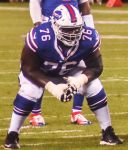
John Miller of the Buffalo Bills demonstrating a ‘2-point’ or ‘up’ stance. Photo Erik Drost, Wikimedia

This study evaluated the number of head acceleration events (HAEs) based on position, play type, and starting stance.  The most significant outcomes were reported for offensive linemen.  Offensive linemen in North American football have typically begun plays in a ‘down’, or what is known as a 3- or 4- point stance, as opposed to an ‘up’ or a 2-point stance. The position taken at the start of the play is sometimes dictated by what type of play, run vs. pass, may be run. Read more of this post

CJSM Podcast with Kim Barber Foss and Greg Myer

We’re excited to ring in 2020 (and our 30th year of the journal) with both the publication of our January issue and a podcast with two special guests:  Kim Barber Foss MS, ATC and Greg Myer PhD from Cincinnati Children’s hospital, the lead and senior author on a study published in our November 2019 issue, Relative Head Impact Exposure and Brain White Matter Alterations After a Single Season of Competitive Football.

Kim Barber Foss MS, ATC

Kim and Greg are prolific researchers and have published widely. For instance, Kim published one of the seminal papers on youth sports concussion over 20 years ago in JAMA: Traumatic Brain Injury in High School Athletes. Do you remember those hoary days of the late 90’s, a prelapsarian world before iTunes and Twitter????  And Greg has published widely on subjects from ACL injury to concussion.  He has been a frequent contributor to CJSM and a major force in advancing evidence-based sports medicine.

With good friend and frequent CJSM contributor, Greg Myer PhD

I hope you get the chance both to read the study and listen to the podcast.  As ever, the podcast conversation can be an illuminating way to understand the author’s interpretation of their own work — conclusions which can be quite different from those which an individual reader may draw from the same study.  This is most especially true when the underlying subject — brain injury in youth contact sports — is such a controversial one.

As ever, you can find and subscribe to our podcasts on iTunes or at the CJSM website. If you have feedback to give us about the podcasts in general, please take the time to rate CJSM at iTunes.  And if you want to comment on this particular podcast and this particular study, please do so on this blog’s moderated comment section.

Enjoy the January 2020 issue and Happy New Year!