CJSM Podcast: Dr. David Howell looks at pediatric concussions

One of the top young guns in the world of pediatric sports medicine research is David Howell, PhD, ATC of Children’s Hospital Colorado, and the University of Colorado School of Medicine.  Dr. Howell has graced the pages of the CJSM blog before and, even more notably, the pages of the journal itself many times.  He has been one of CJSM’s more prolific authors over the last few years.

When we recently published several of his articles within a span of months, I knew it was time to reach out and get him on the podcast.

Listeners will not be disappointed — Dr. Howell is as erudite and lucid a speaker as he is a writer.  Together in this, our newest podcast, he and I discuss “Breaking research developments in pediatric and adolescent concussions.”  We were able to focus on three of his most recent studies published in CJSM:

Dr. Howell’s work continues to fill a significant research gap noted by the Berlin consensus statement on concussion group — the relative lack of evidence for how to diagnose and manage concussions in the under 13 year old crowd.  Not surprisingly, several of these new CJSM studies have received a lot of buzz, most especially the first study in that litany (on Concussion symptom profiles).  As someone who sees concussions in this age group on a nearly daily basis, I have found the results of this published research to be, already, of significant practical use.  The Altmetrics on the paper underscore the importance of the work.
This newest podcast can be found with all of our podcasts here on the CJSM website and here on iTunes  And don’t forget you can subscribe to our podcasts on iTunes so you never miss one.

Thank you, again, Dr. Howell for the continued work you do in the field of sport medicine at large, and in the area of pediatric sport-related concussion in particular.

Five Questions with Dr. Nick Peirce: The Role of Physical Activity and Sport in Mental Health

Dr. Nick Peirce, lead on the FSEM team producing recent exercise and mental health position statement.

Reduce depression and cognitive decline by up to 30% with regular exercise?  Can this be so?

For those of us ‘in the know’ in this field of sport and exercise medicine, that statement may seem understood.  But medical research translating to broadly held knowledge which then may lead to meaningful change:  well, we ALL know how rare that situation can be.  The management of recent concussion events in the FIFA World Cup reminds us of the difficulty of knowledge translation: there were instances where it seemed as if we were ‘partying like it’s 1999’ so to speak.

Reviews of the current state of evidence-based knowledge about medically important findings continue to be of vital importance in ‘getting the word out’.  In that spirit, we couldn’t be happier to see the recent position statement released by one of our partner societies, the Faculty of Sport and Exercise Medicine (UK) : The Role of Physical Activity and Sport in Mental Health.

The lead on the team of authors which produced this FSEM UK Position Statement is Dr. Nick Peirce, Chief Medical Officer of the England and Wales Cricket Board.  We wanted to pick his brain to get a bit more of the background work which resulted in this statement.  The summer Cricket season has kept Dr. Peirce occupied above and beyond his usual level of busyness.  During a gap between competitions, CJSM caught up with him — the results of our interview can be found here.

__________________________________________________________________________________________________

1. CJSM: We want to discuss the new FSEM statement on the role of physical activity and sport in mental health, but first can you tell us a bit about yourself: your background as a sports medicine clinician and your involvement with FSEM?

NP: I have been involved in Sports and Exercise medicine for over 20 years having worked across a large number of Olympic and Professional sports, including Leading Sports Medicine for English Institute of Sport (EIS) at the busiest site in the country at Loughborough University, the Davis Cup team and the football team Nottingham Forest. I am a Hospital Consultant in Sport and Exercise Medicine in the NHS and have been Chief Medical Officer for the England Cricket for the more than 10 years. I have been involved in many of the Sports Societies and for 3 years have sat on the Faculty (FSEM), although professional sport commitments make this challenging.

2. CJSM: How did you become involved with this particular FSEM project on mental health – was there a large team involved in the production of this project? Was FSEM the only organization involved in the drafting of this document? Read more of this post

CJSM podcast with Chris Nowinski: What FIFA might consider doing differently in 2022

It was a whirlwind of a month that just ended:  World Cup 2018 has been rightfully celebrated as a wonderfully exciting display of sport.  Media outlets around the globe are reflecting on the highs and lows of the tournament. 

One of my favorite comments was a tweet conversation involving former English professional footballer Gary Lineker:  “Back to politics now, eh?/ What a depressing thought.’ 

Politics. Ugh.

Twitter was also the media where I read some of the most insightful commentary on the various concussion controversies that occurred this tournament, and Chris Nowisnki, Ph.D. was among the most prolific and penetrating in his analyses of the injuries to Matuidi and others.

Dr. Chris Nowinski of the Concussion Legacy Foundation

Dr. Nowinski will be a familiar figure to anyone involved in the management of sport-related concussions. Dr. Nowinski is the CEO and co-founder of the Concussion Legacy Foundation and a co-founder of the Boston University CTE center. He has been a guest on the CJSM podcast previously.

He was the perfect analyst to review what sport still gets wrong about concussions in 2018, and to review the directions where we all might consider going as we turn toward FIFA 2022 in Qatar.

Go to our podcast link on the CJSM website or on iTunes — listen to what Dr. Nowinski has to say, and then let us know what you think.


An opportunity of a lifetime: The AMSSM Traveling Fellowship

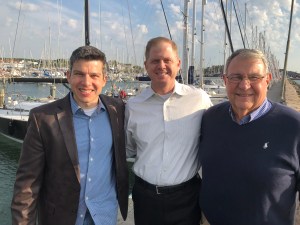
Drs. Leonardo Oliveira, Jason Zaremski, and John Lombardo (L to R), enjoying the long evenings in Scandinavia.

In 2015 I became a very lucky man:  I was chosen, along with Doug McKeag and Alison Brooks to be one of the American Medical Society for Sports Medicine (AMSSM) Traveling Fellows.  That year, we visited South Africa, and AMSSM/USA enjoyed a reciprocal visit from Jon Patricios, one of the pre-eminent sports medicine practitioners in the land of the Springboks.

The journey I shared with Doug and Alison and so many South African colleagues was a trip of a lifetime.

The AMSSM, one of CJSM’s affiliated societies, awards the Traveling Fellowship annually. This year’s worthy (and lucky) recipients were the Americans John Lombardo (past-president of AMSSM), Leonardo Oliveira and CJSM’s Jr. Associate Editor, Jason Zaremski.  Their journey took them to Scandinavia, where they were hosted by Norway’s Hilde Moseby Berge (Chief Medical Officer of her country’s Paralympic team) and others.

I reached out to the American team to ask them how their trip went. They couldn’t have been happier to share a bit of their wonderful experience.

_____________________________________________________________________

AMSSM Traveling Fellowship — Scandinavia 2018

By: Leonardo Oliveira, John Lombardo, and Jason Zaremski

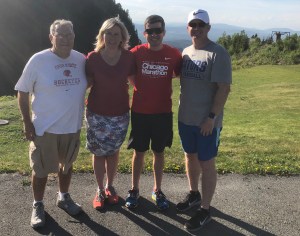
Drs. John Lombardo, Hilde Moseby Berge, Leonardo Oliveira, and Jason Zaremski (L to R)

As sports medicine physicians in the United States, we (Leonardo Oliveira and Jason Zaremski) had the opportunity of a lifetime—to travel to Scandinavia under the direction of one of the AMSSM founders, Dr. John Lombardo (known as “the Godfather” to our Scandinavian Colleagues 🙂 as the AMSSM Junior Traveling Fellows for 2018. The traveling fellowship is an educational international experience designed to provide a unique global academic learning opportunity to interact with sports medicine leaders from around the world. The Traveling Fellowship program is also a two-way exchange. Each year AMSSM selects a sports medicine physician from a partnering country to serve as the International Visiting Fellow. This year it was Dr. Hilde Berge, Chief Medical Officer for the Norway Paralympics. Dr. Berge, in addition to attending and presenting at the AMSSM Meeting in Orlando, FL, also lectured and visited sports medicine centers in Greenville, SC, Richmond, VA, and Boston, MA.

We have been asked multiple times since we have returned to the States:  what were the highlights of your trip?. Read more of this post