Death Valley: The ‘Baddest’ Sports Venue in the USA

Quietdunes

Dunes in Death Valley National Park

I’m on spring vacation with my wife and children in, naturally, Death Valley.

dead sea

Lounging in the Dead Sea

While other folks seek their spring sun and sand dunes by the oceans, I have taken my family out to the hottest, driest, lowest area of the United States:  Badwater Basin is fully 282 ft (86m) below sea level.  The only place on this planet I’ve been ‘lower’ is the Dead Sea in Israel.

Hey, the Dead Sea:  combines desert and water.  That could be Spring Break Destination 2016!

In truth, I’ve been intrigued by such places my whole life.  The fascination may resemble that which grips some members of the sporting community:  those desirous of  scheduling endurance events in some of the more inhospitable places on the planet.

There is the Hotter ‘N Hell 100, which takes place Aug 29 2015 in Wichita Falls, Texas–not a place one normally goes at that time of year, and certainly not a place one normally goes to bike a century:  the average daily high is 96.6 F (35.9 C)!

And, of course, there is the famous Badwater 135, which takes place in Death Valley itself.  After a one year hiatus, it returns this year and will be run July 28 – 30.  A 135 ultramarathon run at the hottest time of the year in Death Valley!  No wonder the event bills itself as “the world’s toughest foot race.”  (there’s competition for that moniker; the Marathon des Sables, held in the Sahara desert, would quibble over this issue I’m sure)

There is some great sports medicine research that comes out of these very human attempts to push the limits. Read more of this post

A Blue Card for Rugby

All_Blacks_Haka

“All Blacks Haka” by Sonya & Jason Hills from London, UK

Rugby is wildly popular in New Zealand, and that’s no news for anyone who follows sports.

It may be less appreciated how much medical research on rugby and other sports comes from the Land of the Long White Cloud.  The University of Otago in Dunedin, for instance,  conducts a good amount of research on sports medicine in general, and on concussions in particular.  Recently, the University hosted a conference entitled ‘Understanding sports concussion:  facts and fallacies.’

Our intrepid reporter from New Zealand, Dr. Hamish Osborne, is on the editorial board of CJSM and has previously done some guest blog posts when he was attending the annual ACSP conference in Australia.  He was one of the faculty at the Otago lecture and I asked him to share with us any of the important topics addressed .  What follows is the current breaking news on how NZ Rugby is managing concussions.  Thanks Hamish!

____________________________________

New Zealand Rugby Rolls out Concussion Blue Card (Dr. Hamish Osborne)

New Zealand rugby has approved the rollout of the “Blue Card” system to all levels of rugby in New Zealand with the exclusion of the professional programs.  Soccer has the yellow and red cards systems for misdemeanors. Rugby has a similar system for misdemeanors. The Blue Card will be shown to anybody who leaves the field or is required to leave the field for a suspected concussion.

Under the present rules of the game “an athlete with any symptoms following a head injury must be removed from playing or training. It is then recommended that a player is referred to a medical professional for diagnosis and guidance, even if the symptoms appear to have gone They must not return to activity until all symptoms have cleared.”The International Rugby Board (now known as ‘World Rugby’) regulation 10 New Zealand Domestic Law Safety Variation says that any player in New Zealand who has been concussed or suspected of being been concussed must follow IRB regulation 10 and the IRB concussion guidelines and clearance to return to play by a medical practitioner must always be obtained.2

Until now there has no been no paper trail to confirm that these rules are abided by. Read more of this post

Rugby’s Big Year(s)

IMG_1008

Sam Boyd Stadium, Las Vegas Nevada, site of the annual Rugby 7s tournament.

It’s amazing how time flies.  How is it already March?

It’s almost 7 p.m. and I’m writing by the light of a sun that is still above the horizon, thanks to one of my favorite inventions of the modern world: daylight savings time, which arrived last night.

This realization is a personal reminder, however, that I have been delinquent: meaning to write a blog post about an event that took place three weeks ago…..but, my oh my, business has just swamped me, I guess.

As the swallows return annually to San Juan Capistrano, so do the Rugby 7 squads of Kenya, South Africa, New Zealand and other countries come each February to the desert:  Las Vegas hosted the USA leg of the HSBC Sevens Series Feb 13 – 15.  It is the largest annual rugby tournament held in North America. and Las Vegas has been its host since 2010.

As followers of the blog will know, USA Rugby conducts an outstanding medical symposium every year just prior to the tournament, and I was out for some education as well as sport.  It was a fabulous conference, and I do hope you all get a chance to attend some day.

Tim Hewett, who is well known to readers of this blog, gave a great talk on original research of the difference in injury rates between collegiate rugby and American football players.  We are most definitely looking forward to seeing that research published.  Hey, Tim, if you’re looking for a place to send that manuscript for peer review, send it our way.

His colleague from Ohio State, the orthopaedic surgeon and OSU Team Doc Chris Kaeding, gave a great talk as well, regarding data on knee outcomes coming out of the ‘Multicenter Othopaedic Outcomes Network,’ or MOON group, some of whose research we have published in CJSM.

With the George North story on everyone’s mind, we were all eager to hear what concussion experts such as Chris Nowinski of the Sports Legacy Institute had to say about minimizing injury risk in rugby.  Nowinski presented one of the best and most nuanced talks I have heard on the ‘concussion crisis’ in sports. I enjoyed it so much I caught up with him after the conference, and the interview I had with him is now available as a podcast. Read more of this post

Spring soon–(sort of)

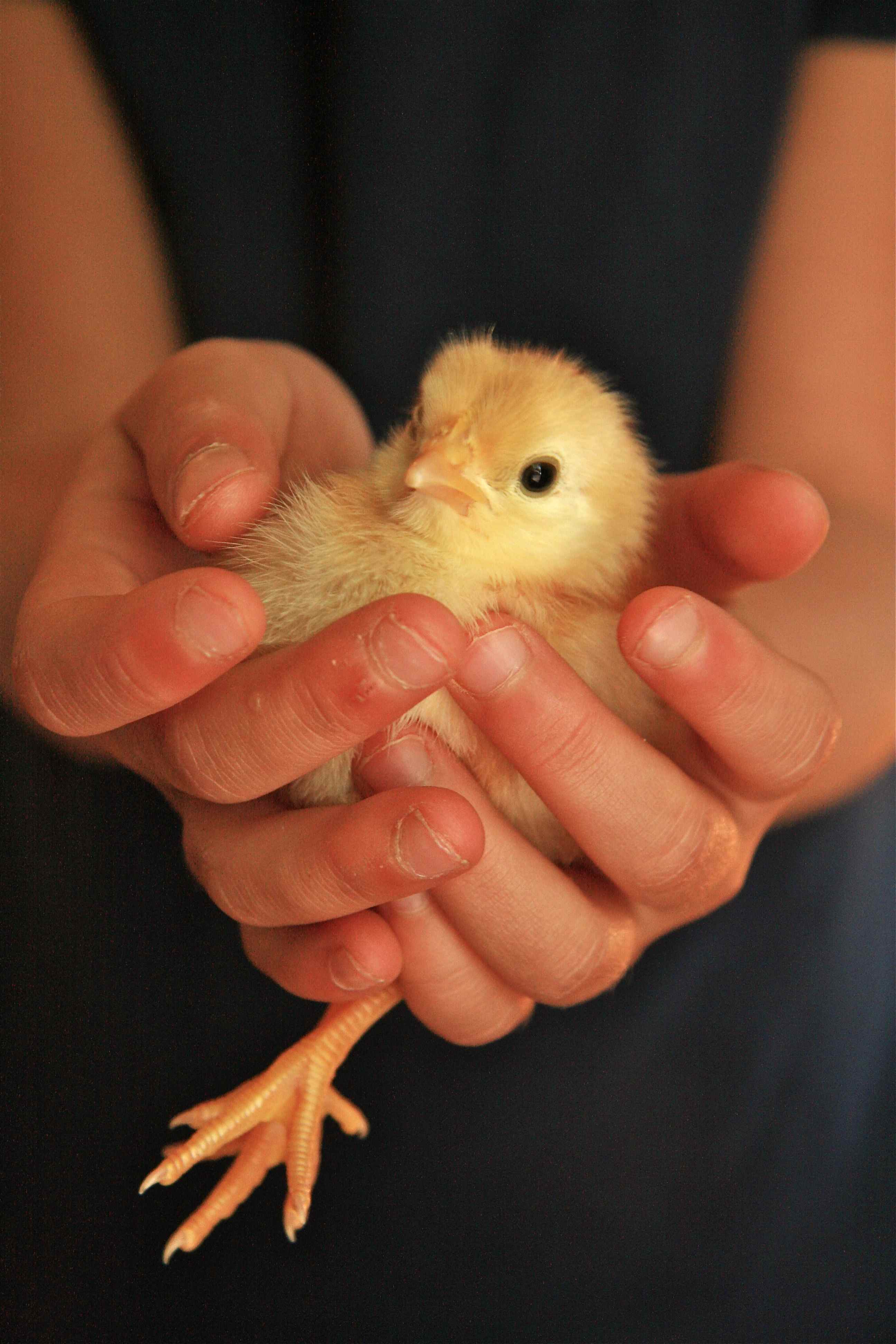
chick1

It’s March, and if we can’t have pics of flowers in bloom or green sports fields then we’ll settle for a cute chick.

The calendar says March, but looking outside tells me something different.  I think we’re doing better with our snow here and now than Sochi ever did for the 2014 Winter Olympics.

The high school and university student athletes in central Ohio, where I am writing this blog post, are trying to train for their spring sports–track and field, lacrosse, baseball; but they are definitely doing most of it indoors still.  We are all wondering if the snow will still be around when competitions begin by the end of the month. Imagine a steeplechase pit full of ice–now that’s an incentive to work on your steepling form you distance runners!

There are signs of Spring, of course.  One of my household chickens was squawking the other morning, and on investigation we discovered the first egg of the new year.  It had been four months since that last happened!!!

Moving from the backyard to the sports world: the NCAA college basketball world is heating up with pre-March Madness craziness.  Can Kentucky complete a perfect season, something not done in DI men’s basketball since Bobby Knight’s Indiana Hoosiers did so in 1976? We’ll soon find out.

And then, there is the March issue of the journal, which will have hit your respective iPads, inboxes (via eTOC) or mailboxes by now.  The promise of spring is surely within those covers:  we have the research and case abstracts from the upcoming American Medical Society for Sports Medicine (AMSSM) annual meeting, to take place in balmy Florida mid-April. Dip into those abstracts and feel the warmth of the subtropical sun!

There are several very interesting pieces of original research in the new CJSM, including one on risk factors for acute mountain sickness authored by a group from Taiwan, one which I have previously profiled here on the blog.  There are links on the main page as well to our ever growing library of podcasts.  If you missed our most recent interview with Chris Nowinski of the Sports Legacy Institute, it’s never too late:  all the podcasts are archived and can be obtained in multiple ways, including iTunes.

There will be many blog posts coming profiling all the contents of the issue.

As the Northern Hemisphere turns more, day by day, toward the warmth of the sun, we know that Spring will inevitably arrive.  In the mean time, for all of you still under Winter’s domination and beyond:  enjoy the wide world of sports medicine with us–in the journal, here on the blog, on Twitter, and in our podcasts.