The Most Dangerous Sport in the World?

Bull_Tamer

A Bull Tamer in Australian Rodeo Event. Photo: Amcilrick

TheByrdsSweetheartoftheRodeo

“Sweetheart of the Rodeo”

I’ll confess I don’t know much about rodeo.  To the extent the word triggers a response in my mind, I think of Gram Parsons and the Byrds:  “Sweetheart of the Rodeo.” Click on the link and take a listen:  it’s a great album!

Back to sport….it’s my own cultural myopia that overlooks rodeo when I think of the word ‘sport.’ I didn’t grow up participating in it, and in central Ohio I have not attended to any rodeo injuries (equestrian, yes; bull riding, no). I imagine my situation would be different if I practiced in Wyoming or Alberta…..or parts of Mexico, Argentina, and Australia (rodeo is truly international).

As I grow older, I delight in learning more about other sports; my involvement with CJSM certainly has expanded my horizons. Last year, for instance, I wrote (and learned) about the ice sport of ringette after the journal published a study on the injury epidemiology of this largely Canadian activity. I had previously never heard of rignette. Shame on me.

I was reading the New Yorker earlier this week when I came across this tantalizing entry: “The Ride of Their Lives: Children Prepare for the World’s Most Dangerous Organized Sport.”  The focus of the article is a particular event in rodeo, bull riding, and the kids and families who participate in this sport….which is, indeed, very dangerous.   “It’s not if you’re gonna get hurt; it’s when,” one parent is quoted.  As a pediatric sports medicine physician, I was bound to be hooked.

I was delighted to see the New Yorker author use the work of Dale Butterwick as one of his chief sources for the article’s epidemiologic data. Mr. Butterwick is a faculty member of the University of Calgary, Alberta, and has written extensively on injury patterns in rodeo.  Among his more important works is the CJSM 2011 study, “Rodeo Catastrophic Injuries and Registry:  Initial Retrospective and Prospective Report,” which reported on 20 years of data collected by the only, international registry for catastrophic injury in rodeo, which he maintains. Read more of this post

In honour of the Grey Cup

Series 975 - Primary photographs of Gilbert A. Milne & Co. Ltd.

Celebrating with the Grey Cup

The Grey Cup, the ‘Super Bowl’ of the Canadian Football League, is being contested this evening in Vancouver. The Hamilton Tiger-Cats face off against the Calgary Stampeders, and it promises to be an exciting contest.

We are proud of the diverse background of our many contributors to this peer-reviewed journal, who range from academics to clinicians who are ‘in the trenches.’ One of those on the front-lines is David Levy, M.D., the Medical Director for those Hamilton Tiger-Cats.

His piece from the 2012 CJSM, on a ‘risk-tolerance approach’ to assessing athletes undergoing a pre-participation evaluation (PPE), is always worth a read; perhaps never more so than in light of our most recent CJSM piece on advancing the PPE.  While you’re at it, catch our podcast conversation with William Roberts, lead author of that new PPE statement.

And then sit down to enjoy the Canadian football action.  Good luck to Dr. Levy’s Tiger-Cats, and good luck to their opponents, the Stampeders, as well.

Chris Hughes's avatarClinical Journal of Sport Medicine Blog

This month’s Editorial in CJSM by Levy and Delaney highlights the issue of the role of the Team Physician in the process of the Preparticipation evaluation.

Team Doctors are often called upon to make a decision about the suitability of an individual for return to play. In this role, the burden of responsibility for the decision making process is likely to lie with the clinician, at least in the first instance, whether or not the team manager and the player decide to follow their advice.

Few would argue that the clinician is best placed to make a definitive ‘medical’ decision on return to play decisions since they are likely to have the most educated opinion about decisions related to the health of the player within the team environment. However, the question of where the responsibility should lie with the ultimate decision made is a contentious one.

In the context of…

View original post 676 more words

Like Turkey & Gravy: Thanksgiving and the NFL

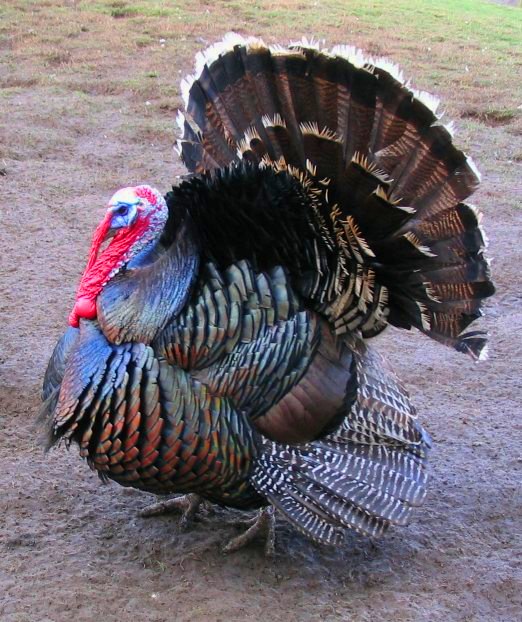
Male_north_american_turkey_supersaturated

Male turkey, photo courtesy of Nordelch.

Yep, they ‘go together’ …..well, maybe not like “….rama lama lama ka dinga da dinga dong,” but the fit is surely as tight and traditional as turkey and gravy.

Today is Thanksgiving; I have the day off; and I’ll be sitting down for a feast, both of food and of football.

The day is loaded with gridiron football:  Lions v. Bears, Cowboys v. Eagles, and Seahawks v. 49ers. The colleges, too, have some intriguing games:  can TCU win and perhaps leap into the top 4 of the college football playoff standings?

Whether or not you are a fan of their respective teams, who can’t get interested in the rivalry between Pete Carroll and Jim Harbaugh, which extends back to their days at USC and Stanford.

“We bow to no man, we bow to no program at Stanford football,” said Harbaugh.  And the two men–and programs they run–continue to go after each other at the professional level. The Seahawks/Niners game should be a good one.

Yes, it will be a great day to enjoy football.

It sure has been a difficult season to do the same.

The New York Times ran a very interesting piece in their Sunday magazine earlier this month:  “Is Football the Next Tobacco?” speculating on whether NFL quarterback will go the way of, well, the Marlboro Man.  America, the magazine of the U.S. Jesuits, also ran a thoughtful piece on ‘what will become of football.‘  And going from the angels to the devils, so to speak, the journalists at Vice sports wrote what I think is a very insightful analysis of what they term the ‘concussion-industrial complex.’  The author echoes many of my concerns over the nexus of sport/injury/fear/business that sports-related concussion has come to represent in modern sport.

Even Saturday Night Live has riffed on the subject, with a very funny segment that aired last week and lampooned several aspects of the ‘concussion crisis.’

On the evidence-based, sports medicine side, we continue to contribute to the conversation over how best to diagnose and manage concussions in our athletes.  In our most recent, November journal, we have a Letter to the Editor from the former President of CASEM Pierre Fremont which addresses concerns over an earlier editorial in CJSM on whether it is time to re-think the Zurich consensus statement and guidelines on concussion.  We were able to interview the authors of that statement in our first podcast; that would make an enjoyable listen for this holiday weekend.  And don’t forget to check our “Published On-Line First” section of the journal’s website, which includes a queue of original research articles that are lined up to be published in print in 2015….but can be viewed right now on-line.  The offerings include a study with important findings on what is special about pediatric concussions by Johna Register-Mihalik et al.

The topic of concussion comes up frequently in the blog as well, of course.  Our review of the television documentary, “League of Denial,” is just one of the many posts we have written on sports-related concussions over the last few years.

Football and feast:  whether you are enjoying this Thursday as the Thanksgiving holiday in the United States, or getting closer to your weekend elsewhere…..I hope you all have a restful and safe few days ahead of you.  For all of us here at CJSM, I can tell you this Thanksgiving how thankful we are to have you engaged with this journal in advancing the research into the health and safety of the athletes we al care for.

All the best.

Sudden Cardiac Death: The Israeli Experience

dr jose garza

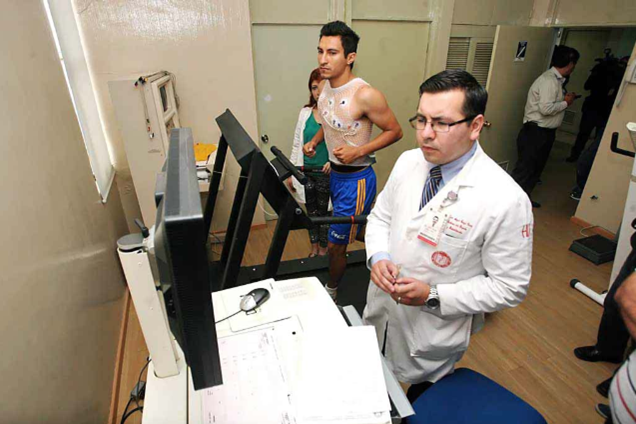
Dr. Jose Garza, conducting a stress test on an athlete, Monterrey, Mexico

Screening for sudden cardiac death (SCD) remains one of the more contentious debates in the world of sports medicine.  As a matter of public policy, consensus medical opinion in the United States still argues against universal, mandatory  screening with electrocardiograms (ECGs); whereas in Europe, specifically in Italy, ECG screening is more of a routine practice.

The debate over this screening is carried on at many conferences and in many medical journals, including ours.  We’ve previously looked at the question of whether it makes sense to screen North American athletes with ECGs, for instance.  Earlier this year, we published a review of the different approaches American universities are currently using regarding the issue of athletic cardiovascular screening.  Recently, the topic came up in the podcast discussion I had with Dr. William Roberts on new directions for the pre-participation evaluation (PPE).  American and European sport medicine bodies can find a lot of common ground in where the PPE can be improved, according to Dr. Roberts, with the principal exception of this one issue.

Recently, Dr. Sami Viskin, from the Department of Cardiology, Tel Aviv Medical Center, spoke at my home institution about how athletes are screened for SCD in Israel.  He has written extensively on the issue of screening athletes for SCD, including a study arguing that it is not a cost-effective strategy in the United States.  The title of his recent talk: “Mandatory ECG screening of athletes saves lives: proven fact or wishful thinking?”

Our Division of Sports Medicine has been hosting another international guest this past month: Dr. Jose Angel Garza, a sports medicine physician from the University Hospital of the Universidad Autonoma de Nuevo Leon (UANL) in Monterrey, Mexico. He was also present at Dr. Viskin’s talk, and I asked him for his reflections on the subject of mandatory ECG screening in athletes.

Thanks Joe!

________________________________________________

Among the sports medical community, there is an ongoing and often heated debate on whether mandatory ECG screening should be performed on athletes. Several countries such as Italy and Israel have implemented such measures. The European Society of Cardiology has issued recommendations about mandatory screening of athletes with ECG. So this begs the question: Does ECG screening save lives in athletes? Read more of this post