Revisiting Bicycle Helmets: Injury Prevention for Kids and More

A year ago I wrote the blog post below, which I am re-posting today.  I wrote the post to coincide with the publication in the November 2013 CJSM of the Canadian Academy of Sports and Exercise Medicine (CASEM) position statement on mandated bicycle helmet use in Canada.

I was reminded of the statement–and the blog post–today as I came across an article posted on the Facebook page of CASEM related to a recent study published in the New England Journal of Medicine looking at the the causes of head injuries in children.  For those under high school age, falls–including those from bicycles–are an exceedingly common cause of head injury.  One striking statistic from the study, quoted in the article:  for children presenting to the ED with a head injury resulting from a bicycle accident, only 18% were wearing a helmet.

The post I wrote last year generated more responses I think than any other post I have written on this blog, and it warranted several follow up posts .  I was struck by the passion–and quite often, vitriol–of many people writing in.  It wasn’t my first introduction to troll-like behavior on social media, but it was possibly the loudest and most ‘international’ I have experienced to date.

I hope you have a chance to look at the articles contained in the links on this post and the ‘reblog’ below.  I think the approach to injury prevention, specifically relating to bikes and most specifically relating to ‘kids on bikes,’ should be multifactorial:  yes to improved road safety, yes to a different relationship between cars and bikes, yes to a built environment that is more accommodating to bikes and pedestrians–but yes as well to personal protective equipment, like helmets.

As ever, we are interested in your thoughts.  But I say with the utmost politeness:  please note that any post that I find does not contribute to a civilized discussion will not be posted on the discussion board.

All the best.

sportingjim's avatarClinical Journal of Sport Medicine Blog

The November issue of CJSM has been out for a week, and I hope you’ve had a chance to look at our latest offering.  It is also our last offering for 2013 (CJSM is a bimonthly, publishing 6 times a year).  The next time the journal will hit your mailboxes and inboxes will be January 2014.
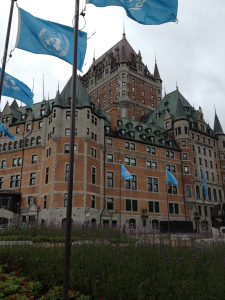
FIMS 2014 Quebec City, site of the XXXIII FIMS
World Congress of Sports Medicine
CJSM will be there: will you?

2014 promises to be a big year in sports and sports medicine.  The Winter Olympics take place in Sochi, Russia; the FIFA World Cup is in Brazil; and the Commonwealth Games are in Glasgow, Scotland.   On the sports medicine front, the Canadian Academy of Sports and Exercise Medicine (CASEM) hosts the FIMS 2014 World Congress of Sports Medicine in Quebec City, and earlier in the spring the AMSSM annual meeting takes place in…

View original post 1,260 more words
A special day: November 11

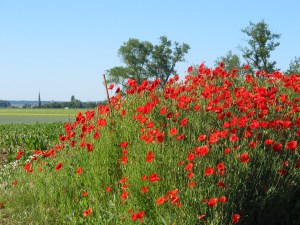
Grand-Reng_JPG04

Poppies in Flanders’ Fields, photo Jean-Paul Grandmont

Veteran’s Day, or Remembrance Day as I understand my friends overseas call this day, is observed today, November 11.  In the United States, it is a time to remember the military service of so many men and women.  It happens on this day for a reason, of course: World War I, which began 100 years ago this year, ended with an armistice that went into effect at 11 a.m. on 11/11, 1918  (hence, yet one more term by which this special day is known:  Armistice Day).

On this day, I think of many men in my family who gave years of their life in this service.  It is a tradition I suspect many of this blog’s readers share, remembering their own relatives in the military.  In my own family my Uncle Ted, my godfather, was an Army Air Corps pilot in World War II (WWII).  After being shot down over enemy lines, he spent years as a POW in a German camp known as Stalag Luft I. If you want to read a story of true heroism, check out his. My father served for several years in the Air Force in the Korean War.  In fact, every single male member in his family served in the American military at some point.

Sports medicine’s attendant issues, as serious as they may be, typically pale in comparison with the injuries the military service-men and -women face.  That said, there is significant overlap between the military and sports worlds, and there is a lot we sports medicine clinicians can learn from our colleagues in military health care.   Many of the premier figures in American sports medicine–Francis O’Connor, M.D,, for instance–are military officers, who do most of their research on active individuals in the military; so much of that work is directly translatable to athletes.  Dr. O’Connor is in fact a past president of this journal’s partner society, the American Medical Society for Sports Medicine (AMSSM).

Much of what guides how I treat primary anterior shoulder dislocations in late adolescent and young adult athletes comes from research out of the United States Military Academy.  In the pages of CJSM itself, we rather frequently publish studies which have used the military as research subjects.  The Incidence of Injury and Physical Performance Adaptations During Military Training is a great example of such a study, published in our May 2003 issue.

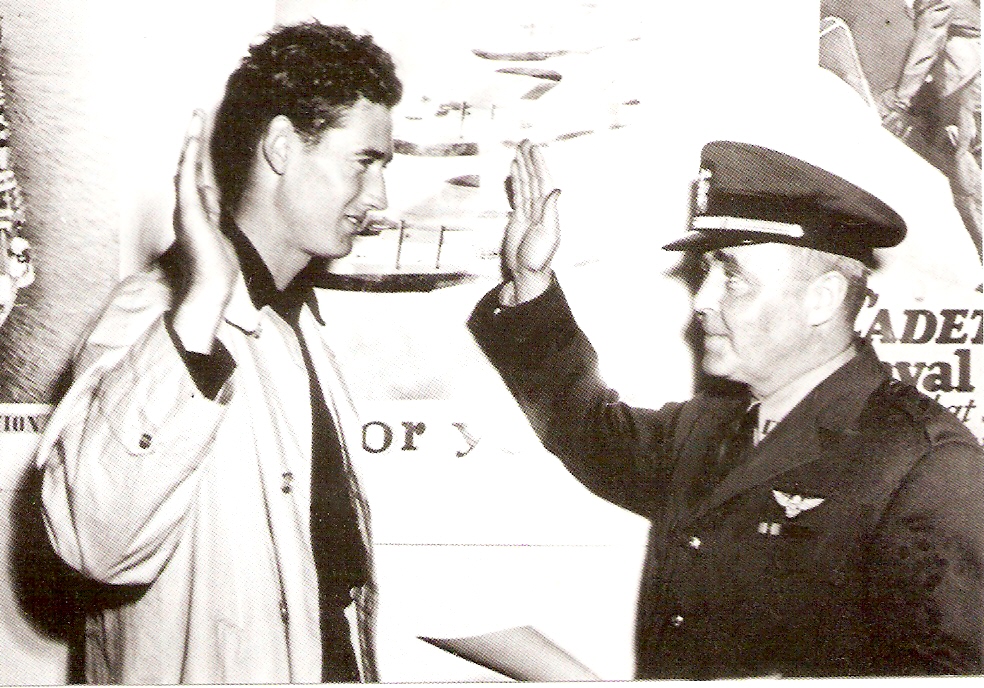
Ted_Williams_swearing_into_the_Navy_1942

Ted Williams, swearing into the Navy, 1942.

And then, of course, there are the multiple well-known examples of athletes who have led parallel lives as soldiers, or sailors or pilots. The great baseball slugger Ted Williams served two tours of duty as a Marine Corps pilot, in WWII and the Korean War. It is arguable that Teddy Ball Game may have had a chance at being the career home run king in Major League Baseball if he had not ‘lost’ nearly five years to the military.  And the inspiring story of Louis Zamperini, WWII POW and 1936 Olympian, is told in  the movie “Unbroken,” to be released at Christmas.

Some of you may have the day off, and I hope it is restful for you.  Some of you, including myself, will be working.  I hope we all pause to remember the service-men and -women in our lives.  I hope, as well, we all pause to consider how we may work for peace in our world. One hundred years ago this year, “The War to end all Wars” began:  the promise in that epithet surely has not been fulfilled.

All the best–and peace.

CJSM Podcast 5

jsm-podcast-bg-1I’m pleased to present the journal’s fifth podcast, highlighting the new ACSM and FIMS consensus statement on the Preparticipation evaluation (PPE) published just last week in the November 2014 CJSM.

I was able to interview William Roberts, M.D., M.S., FACSM, the lead author of the study.  I learned a lot from the conversation with Dr. Roberts.  I hope you do too.

Listen to the podcast here, or use the iTunes link found on the main page to check out all of our podcasts.

And while you are at it, please also visit the previous blog post and take the poll:  we’re interested to know if you use electronic documentation and data storage when you conduct PPE’s (a so-called ‘e-PPE’).  Enjoy!


The November CJSM and the PPE

Halloween, El Dia de los Muertos….Guy Fawkes Day!  We end October and roll into November in an exciting way in North America and across the Atlantic…..all the more so here at CJSM, where November 1 marks the publication of our sixth and last issue of the calendar year.  Our crew–ranging from the Editor in Chief in London to our Managing Editor in Canada–can, perhaps, take a few days break and indulge in the candies, dulces, or bonfires, as the case may be.  And the rest of us can enjoy the treat of the new journal.   We have a great issue in store, and I plan on profiling over the next month several of the published studies here in the blog.  The headliner has to be the in-depth view on the athletic preparticipation physical evaluation (PPE):

Advancing the Preparticipation Physical Evaluation:  An ACSM and FIMS Joint Consensus Statement.

Check it out:  it’s free even without a subscription to the journal, for the time being.

I am working on the podcast production phase of an interview I had with the lead author, William Roberts, M.D.;  the final product promises to be a lot of fun and will be broadcast soon. One of the subjects Dr. Roberts and I touched on in that talk was the potential value of the electronic evaluation, or ‘e-PPE.’  To whet your appetite for what is to come, why don’t you take the poll at the top of this post, and let us know if you use an e-PPE in your practice (in Ohio, where I practice, we just started using them with high school athletes this spring).  Then, click on the link above to the study itself.

Stay tuned for the podcast, and be sure to check out the entire new issue.  November is here, and with it the promise of good things in the journal and on the blog.