The World Cup Final and More

Maracana_Stadium_2013

Maracana Stadium, site of the 2014 final….and site of more medical controversy?

At last. we have reached the final game of the 2014 FIFA World Cup.  Who will be crowned the victor, Argentina or Germany?  We will soon find out.

There has been plenty to write about and talk about in this tournament, which began back on June 12 at Arena Corinthians in Sao Paulo.  On the sport medicine front, we have seen issues ranging from Neymar’s fractured vertebra to the concussion seen ’round the world:  Uruguay’s Alvaro Pereira and his return to the pitch immediately after his injury were the focus of our post a few weeks back.

I haven’t yet had the chance to discuss with you all the incident which occurred in the semi-final between Argentina and the Netherlands, involving Javier Mascherano.  Since he’ll be playing for Argentina in today’s final, I thought it high time to discuss his injury and the further implications such events have for sports medicine clinicians covering sports around the world.

Like many of you I was watching the semi-final live.  [Full disclosure:  I was rooting for Argentina (I still am….hoping for a triumph of faith over reason in today’s final!)].  For those who were watching you will remember, that Mascherano went down toward the end of the game after colliding with an opponent’s head while the two were attempting to head the ball.  The medical staff worked on him for several minutes.  While this was going on, my son correctly worried that should he not be able to return to the pitch, Argentina would have to play a man down, as they had already used their limit of three substitutions for the match.

Like a lot of sports medicine folks watching, I was surprised to see Mascherano make it back to the pitch; it seemed clear that he had possibly suffered a concussion, and should probably have been removed.  The field-side decision-making was roundly criticized subsequently.  The player himself went on to perform a possibly game-saving tackle on Arjen Robbens after returning to the field.

The complexity of decision-making in these settings is immense.  I re-posted a blog post from our Executive Editor Chris Hughes in the wake of the Perreira incident exploring precisely this issue of same-day return-to-play clearance.  The most immediate consequence of proceeding with what was arguably the correct medical call would have been to consign Argentina to playing a man down the rest of the match.  It’s not difficult to start imagining parallel renderings of what ‘might have been’ for the Netherlands had Argentina finished the match a man down……without Mascherano on the field, who is there to block Robbens’ shot?

All of us clinicians who manage sideline medical care face such decisions.  Regarding concussions, the information is readily available, albeit still up for debate!  You can go to our pages to access the 2012 Zurich Consensus Statement on Concussion in Sport, which argues against same-day return to play and argues for “Sufficient time for assessment and (that) adequate facilities should be provided for the appropriate medical assessment both on and off the field for all injured athletes” (my itals).  You can go to our freely available ‘Concussion Collection,’ which contains some of the research published in our pages on this rapidly evolving field.  You can even listen to our Podcast, with Canadian authors Drs. Oliver Leslie and Neil Craton, who provide a powerful critique of the Zurich statement. Read more of this post
Chiari Malformations and Contact Sports

It occurred to me this morning that it had been some time since I posted a poll on these pages.

So, in between your other seasonal activities–sudoku, crossword puzzles, badminton, croquet–I thought you could spend some of your langurous, summer moments taking this poll.

Of course, I would heartily recommend that, before or after this rigorous task, that you check out the July 2014 CJSM, as well as checking out our on-line “Published Ahead of Print” offering, which contains new research on the issue of Chiari malformations in athletes playing contact sports.  You should also consider listening to our recent podcast–a conversation with that study’s lead author, William P. Meehan, III.

And after doing all that, you should get back to the dock or the chaise longue, and take a well-deserved nap.

I hope most of you (in the northern hemisphere any way) are enjoying some summer fun and getting some holiday time in.

Cheers!

Breakfast at Wimbledon

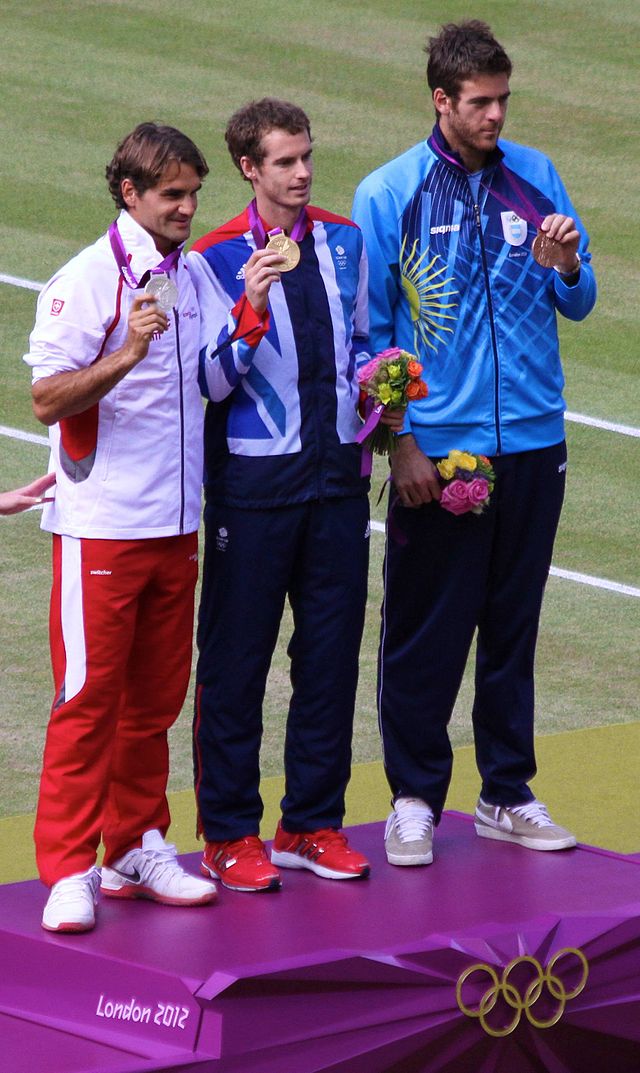
2012_Olympic_Tennis_Men's_singles

2012 Olympics Men’s Tennis medalists. In 2014 Wimbledon, only Federer remains.

The 4th of July here in the States, where I live, has for me always gone hand in glove with something so very British….

I do not refer to the Revolution, to Washington and King George, to Yorktown……No, it’s Wimbledon that is on my mind!!!

Growing up in the late 70’s there were many, many “Fourths’ which I spent in front of the television, with a bowl of cereal, watching some tennis greats in either the semi-finals or finals of the tournament:  Borg, McEnroe, Evert, Navratilova, Connors, Vilas…..and later Becker, Graff, Seles, Wilander, Edberg…..When my friends and I would later go to the public courts to play in those holiday afternoons, we’d imitate the serve and volley style we had just watched, using the contemporary technology of wood or aluminum rackets!  What great memories!

On this holiday, with the men’s first semi-final already begun, I will be brief.  It’s time to get out those Froot Loops and find out if Djokovic and Federer will book their ticket to an epic men’s final; to see if youth will be served:  might Dmitrov or Raonic win it all?  For that matter, will Eugenie Bouchard or Milos Raonic bring home a Wimbledon trophy to Canada?

During the bathroom breaks on court, you may want to hone your own sports medicine tennis knowledge.  I’d encourage you to take a look at the excellent epidemiologic study on tennis injuries treated in U.S. emergency departments, written by a group including the senior author, a frequent contributor to CJSM, and my colleague at Nationwide Children’s Hospital, Dr. Gary A. Smith.  Or you may want to catch up on our most recent podcast, a conversation with Dr. William Meehan on the relative safety of Chiari malformations in athletes.  And by all means, take a peek at the July 2014 issue of the journal, with the headlining article on cardiovascular screening practices of U.S. team physicians.

If you reside in the USA:  happy Independence Day.  And for all our other friends and colleagues around the globe, may you have a safe, active, and happy weekend.  Enjoy Wimbledon, enjoy the World Cup, and enjoy your own sporting activity!

CJSM Podcast 3

jsm-podcast-bg-1It’s hard to believe it is already July 1:  summer is in full swing in the northern hemisphere; the World Cup is half way done; Wimbledon, too; and, I’ve actually seen ‘back to school’ advertisements in newspapers.  Time flies!

One of the great joys of reaching this day, the mid-point of the year, is that we get to publish the fourth CJSM issue of 2014, and it’s a good one.  Be sure to check out what’s on offer here.

In some ways, however, we publish continuously.  In recognition of the great content that has already passed the rigors of peer review and are in the queue for full, print publication, we have a “Published Ahead of Print (PAP)” feature on the main website page.  These are citeable studies, ready to read…..and ready for listening!

Yes, listen:  today’s podcast profiles just one of those PAP studies.  I got to interview William Meehan, the lead author of the new publication:  “Risk of athletes with Chiari malformations suffering catastrophic injuries during sports participation is low.”

Bill has contributed a tremendous amount of original research to the pages of CJSM. Today, sit back and hear what he has to say about the relative safety of Chiari malformations.  And remember:  you can listen to the podcasts here on the blog, at the CJSM main website, and you can subscribe to the podcast stream on iTunes. However you lay your ears on the podcast, so to speak, you’ll be happy!