Spondylolysis: Issues of Incidence and Imaging Part I

I am looking forward to engaging with the readership in discussion on articles contained in our most recent edition of CJSM that came out on May 8.  If you haven’t had the chance to check that issue out, please do so.  The focus in this edition is on “Injury Surveillance in Sports Medicine.”   We have a lineup of articles highlighting research on this issue in an array of sports, ranging from snowboarding to ice hockey to baseball, and from high school to Olympic levels of sport.  I plan to post thoughts about a couple of articles I find particularly interesting, so make sure to visit this site and the CJSM journal site over the next week.

But first, my interest was piqued last week by an article in a Lippincott Williams & Wilkins sister journal, the Journal of Pediatric Orthopaedics, and I wanted to write about that on this Sunday morning, Mother’s Day here in the U.S. (“Mom” has already had her breakfast in bed and is off for a massage, the kids are outside playing, and so I’ve got a couple of hours to get on-line).

My topic for the day is the article, “Imaging Modalities for Low Back Pain in Children:  A Review of Spondylolysis and Undiagnosed Mechanical Back Pain,” found in the April/May 2013 issue of the Journal of Pediatric Orthopaedics.

spondy

Bilateral L5 spondylolysis, CT scan

We see a ton of visits for back pain in our clinic at the Nationwide Children’s Hospital Division of Sports Medicine in Columbus, Ohio.  Our Department of Orthopaedics does as well, but I can only speak directly to the experience of our Division of Sports Medicine, where nine primary care sports medicine physicians (including our fellow) do full time sports medicine. In 2012 we saw 548 unique, new back pain visits in the Division, with a median age on presentation of 14.2 years and a gender breakdown of 55% female visits to 45% male.  Back pain represents 9.2% of our Division’s total new patient visits and is the third most common ‘body part’ we see on presentation (knee is number one, ‘head’–mostly concussion–is number two) with approximately 1700 of 13,000 total patient visits in 2012 having their principal diagnosis fall in some diagnostic category of back pain. Read more of this post
Youth Sports Violence

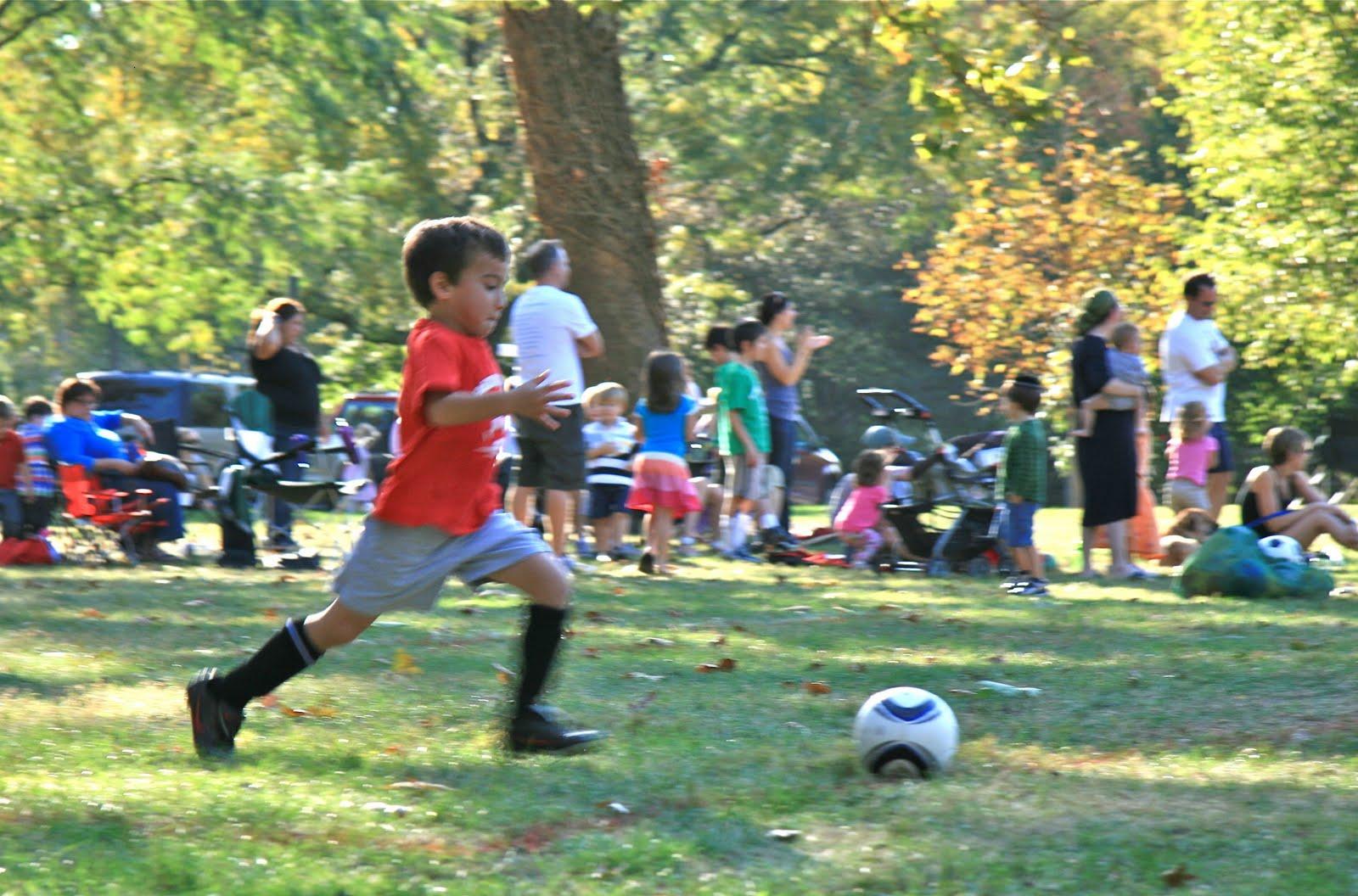
momosoccer

What youth sports should be: sheer joy

I woke up this morning to my usual routine:  coffee and the sports page. Both are necessary for me to get up and going in the morning.   Sport, I think many readers would agree, is usually a source of joy, and so it was with equal measures of sadness and shock that I read about the death yesterday of a soccer referee, Ricardo Portillo.

It’s a heartbreaking story, with a 46-year-old gone, a family fatherless, and a 17-year-old who will soon be tried for murder,  whose life will never be the same and whose own family has been irrevocably changed.

All because of one moment of violence.

Mr. Portillo was working in La Liga Continental de Futbol, a youth soccer organization in Salt Lake City, Utah. Apparently he saw the young man commit a shoving foul after a corner kick; when he cautioned the player and gave him a yellow card, the young man punched the unsuspecting Mr. Portillo in the face.   He immediately fell to the ground and was transported to hospital, where he spent a week in a coma prior to passing away.  The details, including clinical descriptions of the victim after the assault, can be found here.

The article gave me pause and got me to thinking specifically about the incidence of such events in youth sports, which I will discuss subsequently.   The specific issue at hand–how often do referees get assaulted on a playing field–was addressed in the NY Times article: “Reliable data on referee assaults at all levels of all sports does (sic not exist, but there have been several violent events worldwide in recent months (my itals),” and the article goes on to enumerate several of these involving referees.  In truth, however, there seem to be no epidemiological data addressing this issue that the reporter could find.

But for one moment, what of the general issue of violence in sports?

Zinedine_Zidane_2008

Zinedine Zidane in repose

Read more of this post

The Safety of Artificial Turf vs. Grass as a Sport Playing Surface

I was interviewed last week for a newspaper article which looked at the debate over a local school’s intention to transform a grass playing surface to artifical turf.

Among the controversies in sports medicine, the turf vs. grass wars are not the loudest nor the meanest, but they have been among the most persistent ever since 1966, when the Houston Astros first introduced a synthetic turf playing surface in the Astrodome, and dubbed it Astroturf.

Picture_of_Reliant_Astrodome

Reliant Astrodome

The history of the Astrodome makes for interesting reading:  of note, the original intention was for the surface to be natural grass, and the makers of the dome had installed traslucent skylights to allow for grass to grow on the indoor surface.  Alas, not enough light made it to the playing surface, the grass died, and Astroturf was born.

The progress of science and technology have seen Astroturf give way to newer, so-called second-, third-, and even fourth-generation turfs. The  sporting world has even demonstrated that an indoor venue can sustain a natural grass pitch: witness the luminous Forsyth Barr stadium  in Duenedin, NZ, which has hosted matches from the 2011 Rugby World Cup to a recent Aerosmith concert.

800px-Otago_United_v_Waikato_FC_(1)

Natural grass surface on Indoor Forsyth Barr Stadium, Dunedin, NZ

400px-Aerosmith_2

Aerosmith, recent performers on the grass of Forsyth Barr Stadium

So, the question from the interviewer to me essentially reduces to,  ‘Grass:  if its good enough for Steven Tyler and Joe Perry, is it good enough for all of us?’ Read more of this post

Return-To-Play Concussion Legislation in American States

I woke up yesterday morning and the sun was shining, the earth still turned………

In the grand scheme of things, the event that occurred on Friday was minor, so all was to be expected with the world at large.  But in my little corner of the world—the world of youth sports medicine in Ohio—things may be changing considerably, and soon.

Friday, April 26 marked the day that Ohio House Bill 143, Ohio’s “Return-To-Play” legislation that addresses how youth sports concussions are managed, went into effect.  And some people predict a flood of sorts is coming.

As many American readers of this blog might know, the legislators of Washington State signed into law the “Zachary Lystedt Law” in 2009.  This law, the first of its type, has become a model for other states to follow.  The legislation came into being in response to an event which occurred in 2006, when a middle-school student-athlete named Zachary Lystedt sustained a severe head injury while playing American Gridiron football.  The injury was found to be due, at least in part, to a concussion the young man had sustained earlier in the same game.  His injuries were catastrophic: Lystedt did not die, but he will be disabled the remainder of his life.

Image

In 2011, Minnesota Governor signing his state’s concussion bill into law.

The Washington State law contained several provisions addressing issues of education and informed consent, but its centerpiece is a requirement that any athlete playing at any level of youth sport who is suspected of having a concussion cannot return to play without an evaluation by a health care professional and a written, signed statement releasing the individual back to his/her sport.  Over the subsequent four years, 42 states, and the District of Columbia, have established similar laws.

Effective Friday, Ohio has become the 43rd state with such a law in place. Read more of this post