Midsummer

mo and me beaver island

The joys of summer!

July 4th is in the rear-view mirror, and for those of in the USA, that means the glass is half empty (or full): summer has hit the halfway mark.

In many respects, in the sports medicine world we’re well past the halfway point, because August two-a-days and hitting in football begin, at least here in Ohio, precisely four weeks from today.  Then the ‘busy season’ begins.

But we still have July to enjoy – in a slightly more leisurely fashion – such offerings as Wimbledon, the Open golf championship at St. Andrews, and, of course, the new issue of CJSM: Volume 25, issue #4 was published one week ago.

Do check this out, as there are several significant offerings on board this issue.  First and foremost is the publication of the statement from the 3rd International Exercise-associated Hyponatremia (EAH) Consensus Development Conference. This statement has been gathering a lot of buzz in the mainstream and social media, as has the accompanying editorial written by Dr. Mitchell Rosner of the Univ. of Virginia.   The Washington Post published a good review of the statement’s published findings, for instance, and the message to “Drink To Thirst” and avoid overhydration is making its way over various media channels…..including iTunes!  If you haven’t checked out the podcast conversation I had with the statement’s lead author, Dr. Tami Hew, by all means listen in here.

There is, as ever, some exciting original research in this issue as well, including a study of the incidence of EAH in ultramarathoners: in work coming out of Australia, a 2% incidence of EAH was found in ultramarathoners competing in the Cradle Mountain Run in Tasmania, Australia.  And so……EAH may be seeing us more than we are seeing it!!!!

Another very exciting study in this month’s journal is a high quality (Level 1), randomized clinical trial comparing various techniques of ACL reconstruction, with patient-reported and clinical outcomes with 2+ years of follow-up. This is fabulous stuff–no spoiler alert here, as the offering is currently FREE – and so click on that link and read the study yourself to see what differences there may be between double bundle, patellar tendon, and hamstring tendon grafts.

Whether you’re by the pool, a lake, the ocean….or you’re in clinic (as some of us must still be!)–enjoy your summer, and enjoy the July 2015 CJSM.

#Stampede2015 – Cheers to the Calgary Stampede!

800px-Mounties_at_the_Calgary_Stampede_Parade_2011

O Canada! The Mounties parade through the streets of Calgary as part of the Stampede festivities.

The Calgary Stampede starts tomorrow, and we are excited to re-post this popular offering on rodeo: “The most dangerous sport in the world?”

Ironically, another candidate sport for that dubious distinction, calcio storico, has been underway in Florence this past week; the New York Times just had a nice piece on this brutal sport.  Ouch.

But the topic of this post, and the focus of the Stampede, is on the sport of rodeo. Over the years, CJSM has published numerous studies on the subject. Take the time to read this post and connect with the studies, and learn more about this exciting (and injury-producing) sport.

From all of us here at CJSM, to the organizers and participants in the Stampede: we wish we were there, and have a #SafeStampede

sportingjim's avatarClinical Journal of Sport Medicine Blog

Bull_Tamer A Bull Tamer in Australian Rodeo Event. Photo: Amcilrick

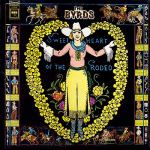
TheByrdsSweetheartoftheRodeo “Sweetheart of the Rodeo”

I’ll confess I don’t know much about rodeo.  To the extent the word triggers a response in my mind, I think of Gram Parsons and the Byrds:  “Sweetheart of the Rodeo.” Click on the link and take a listen:  it’s a great album!

Back to sport….it’s my own cultural myopia that overlooks rodeo when I think of the word ‘sport.’ I didn’t grow up participating in it, and in central Ohio I have not attended to any rodeo injuries (equestrian, yes; bull riding, no). I imagine my situation would be different if I practiced in Wyoming or Alberta…..or parts of Mexico, Argentina, and Australia (rodeo is truly international).

As I grow older, I delight in learning more about other sports; my involvement with CJSM certainly has expanded my horizons. Last year, for instance, I…

View original post 569 more words

CJSM Podcast 10: Exercise-associated Hyponatremia, the 2015 Consensus Statement

jsm-podcast-bg-1#DrinkToThirst is the hashtag that needs to trend in the sports medicine world!

Exercise-associated hyponatremia (EAH), a preventable and treatable but potentially life-threatening condition that can affect athletes under our care, is the topic of our tenth podcast.  And #DrinkToThirst is one of the chief themes to be found therein.

We’re proud to publish the 3rd international consensus statement on EAH in our July 2015 CJSM, and we’re delighted to have the lead author as our guest on the associated podcast.

tami%20and%20snow%20bear[1]

Dr. Hew-Butler and friend.

Dr Tamara Hew-Butler is an associate professor of Exercise Science at Oakland University in Rochester, MI. She obtained her: BS in Kinesiology at the University of California at Los Angeles, CA; Doctor of Podiatric Medicine (DPM) at Temple University in Philadelphia, PA; Residency and Fellowship at the Harris County Podiatric Surgical Residency Program, Houston, TX; and Philosophy Doctor (PhD) at the University of Cape Town, South Africa. Dr Hew-Butler is a Fellow of the American College of Sports Medicine (FACSM) and specializes in both sports medicine and exercise physiology. Her expertise is in exercise-associated hyponatremia and the endocrine regulation of fluid balance during exercise. She trained under Timothy D. Noakes MD, DSc and Joseph G. Verbalis MD and has published ~50 papers on the topic.

Join us in the rousing conversation, and learn i) why athletes should #DrinkToThirst; ii) why sidelines should have hypertonic saline as well as AEDs and access to cold-water immersion therapies; iii) and so much more.

The National Athletic Trainers Association (NATA) Meeting — St. Louis 2015

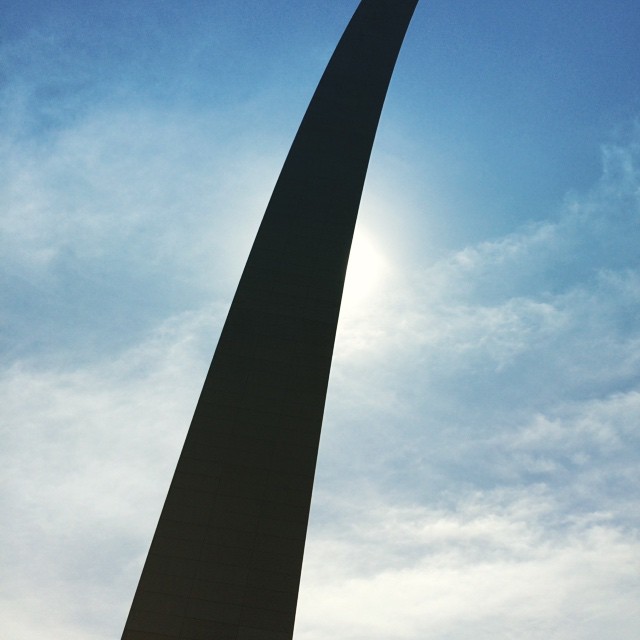
the arch

Eero Saarinen’s Gateway Arch is the signature structure of the St. Louis skyline

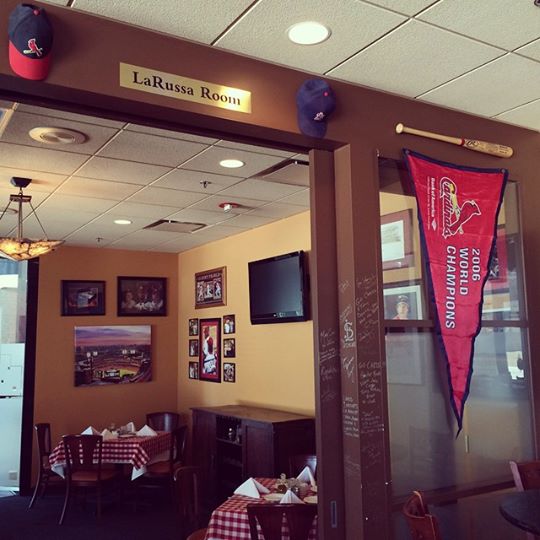
larussa room st louis

They love their Cardinals in St. Louis

I’m honored to have been asked by the folks at NATA to give a talk at their annual gathering, which is taking place right now in St. Louis.

The subject of my talk is how one can use modern technology to stay abreast of the medical literature.  The punch line is:  get on social media, if you’re not there already.

From eTOCs to Twitter, podcasts to blogs, who to follow and when to mute:  I’ll be covering that while I speak here at #NATA2015.

I continue to be amazed at times just how functional social media can be, how important it is for me professionally.  I’m ‘in the know’ when it comes to CJSM, since I’m on the Editorial Board.  But for breaking news from other journals?  Nothing beats social media. Just yesterday I learned on Twitter of a  new meta-analysis of the benefits of high-intensity interval training (HIIT) for improving health-related physical fitness in adolescents from our friends at BJSM.  Twitter!

gail taping ankle

@GSwish — just one of the many fabulous ATCs with whom I work @NCHSportsMed

Reflecting on this meeting, I find it hard to imagine working in this profession of sports medicine without the team play of the certified athletic trainers (ATCs) with whom I collaborate in the clinic and on the sidelines.  ATCs are on the front line when caring for athletes, at least here in the United States.  Almost every significant injury prevention strategem — ranging from identification and early treatment of exertional heat illness, to removing concussed athletes from the field of play — turn on the education, and application of that knowledge, by this amazing group of professionals.

Beyond that, the research these folks do is truly impressive.  Some names of authors who are well known to the readers of CJSM — Kevin Guskiewicz, Tracey Covassin, Jason Mihalik, Johna Register-Mihalik — are all ATCs, and all here in St. Louis.

So I’m getting ready to listen to some great talks given by those folks as well as other invited guests, including the epidemiologist Dawn Comstock and the NCAA Medical Director Brian Hainline.  And I’m getting ready to share what I have heard.  Follow us on Twitter @cjsmonline for some of the breaking news from #NATA2015 !