Sports Ultrasound and the New Year

SCjimkatie

Chillin’ like Bob Dylan: Folly Beach, Charleston, S.C.

Happy New Year y’all!

Returning from lovely Charleston, South Carolina after a relaxing week, I’ll be able to retain a southern, laid-back lilt to my voice for perhaps a day or two more….As many of you would likely agree, there’s nothing quite as bracing as the need to attend to the post-vacation crunch of full email accounts, urgent work-inbox tasks, and full clinic days!

It certainly makes a difference to return to a job and profession one loves.  Sports medicine:  what would I do without you?

I hope you have had a chance to peruse the new, January 2015 CJSM, which is as full of excellent articles as the aforementioned inboxes.  One of the highlights of the issue is the American Medical Society for Sports Medicine Position Statement on Interventional Radiology, which is currently freely available.  I hope, too, you’ve had a chance to catch the new podcast interview with Dr. Jonathan Finnoff, the lead author of the paper.

As a clinician who currently (and regretfully) does not employ sports ultrasound in my current practice, I’m always curious about those professional colleagues who do.  With that in mind, it’s time for the first poll of the year:

Thanks for sharing your thoughts.

CJSM Podcast 6: Sports Ultrasound

jsm-podcast-bg-1With the New Year, we have a new issue, and the January 2015 CJSM is packed with interesting new research.

Among the many articles you’ll want to check out are two relating to sports ultrasound: the American Medical Society for Sports Medicine (AMSSM) Position Statement on Interventional Ultrasound in Sports Medicine and the AMSSM Recommended Sports Ultrasound Curriculum for Sports Medicine Fellowships.

Our first podcast of the year is a conversation with the lead author of these two papers, Jonathan Finnoff, D.O. of the Mayo Clinic Sports Medicine Center.

Take a listen and tell us what  you think!  And Happy New Year!

(and to listen to and download all of our podcasts from iTunes go here).

“The Trouble with Kids”: Overuse Injuries and Burnout in Youth Sports

We’re winding down 2014 and already looking forward to the January 2015 issue, which is packed with important papers including two American Medical Society for Sports Medicine (AMSSM) Consensus Statements.  We’re the official journal of the AMSSM and we’re always excited to publish one of their well-researched statements.

2014 opened, in fact, with an AMSSM consensus statement:  “Overuse Injuries and Burnout in Youth Sports:  A Position Statement from the AMSSM.”  It is our third most viewed study this year at cjsportmed.com.  We caught up with the lead author, John DiFiori, past-president of AMSSM, in one our 5 questions with CJSM interviews in a January 2014 blog post.  Sit down with a cup of egg nog and take a look at those links for some real holiday pleasure!

I know in my own practice of pediatric sports medicine I’ve referred frequently to what I’ve learned from this position statement.  I ‘channel it’ frequently when I’m talking with one of my patients (and parents) about the prevention and treatment of little league elbow in a pitcher or spondylolysis in a gymnast……And I certainly used a great deal of that study in my preparation for delivering a talk at the national youth athletic summit sponsored by MomsTeam in Boston in September:  “SmartTeams Play Safe.”a33c5a4a7e63600ecb112e79412060dda8baa293

I’m reposting my blog post review of that 2014 consensus statement below.  Enjoy, and get ready for a great 2015!  We’ll begin with a bang:  a podcast with the lead author of a new AMSSM consensus statement, and more.

Happy Holidays!

sportingjim's avatarClinical Journal of Sport Medicine Blog

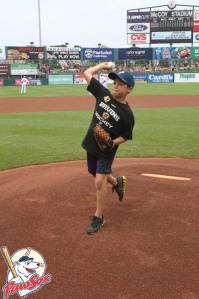
Pawsox_17937_2013-06-30 10,000 hours of practice, and
he might make the Red Sox?*

We’re very pleased at CJSM to open the New Year with a shout:  a fantastic systematic review and position statement on the subject of youth sport, from the American Medical Society for Sports Medicine (AMSSM).

The focus of the paper–in the January 2014 issue, which has just published–is on overuse injuries, which are thought to represent roughly half of all the injuries youth athletes sustain.

All readers of the journal, and of this blog, will find this a worthwhile read.  I have a selfish interest in the subject, as I am currently practicing pediatric sports medicine, and in my professional life I live and breathe the issues discussed in the paper. Moreover, I know several of the authors of this paper, and I think highly of them all.

But this is not about ’eminence based’ medicine. …

View original post 770 more words

#AMSSM14

#AMSSM14 is the tag to follow on Twitter the next few days if you want to stay on top of what is topical in the world of sports medicine.  The American Medical Society for Sports Medicine (AMSSM) is having its 2014 annual meeting in New Orleans these next several days.  #AMSSM14 began Friday and is continuing through Wednesday.  It’s already been a rich experience, one we’ve been looking forward to for a while.

BkkghuLCQAANS53

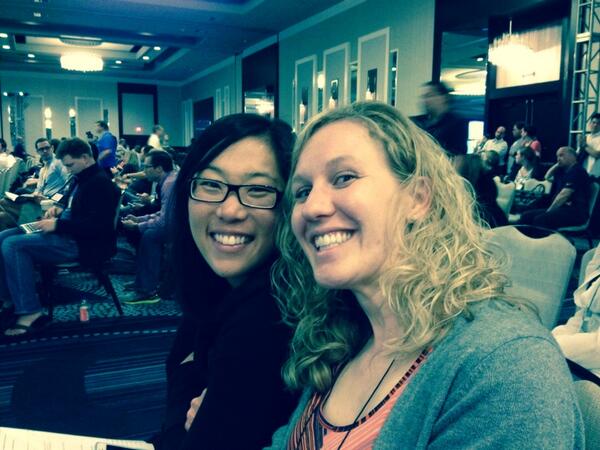
Happy conference attendees, Drs. Jane Sando and Natalie Stork.

Among the speakers who have already graced the podium:  David Epstein, a journalist and author of The Sports Gene, gave a great keynote speech Sunday on some of the factors that go into the ‘making’ of an elite athlete.  He presented a compelling argument for avoiding early sport specialization, allowing the youth athlete to sample and perhaps find the sport that ‘fits’ his or her unique physical attributes.  The talk was the perfect prelude to the afternoon’s sessions, ‘From Best Practices to Burnout,’ a series of lectures on how sports medicine clinicians might best guide youth athletes and families as they work their way through the North American sport system.

Dr. John DiFiori, the outgoing AMSSM president and lead author on the statement on youth sport specialization and burnout we published in January, spoke at length about the findings of that systematic review.  In case you missed the lecture and/or are elsewhere than New Orleans this weekend, take a look at our ‘5 Questions with CJSM’ interview with Dr. DiFiori.  Dr. Tracy Ray discussed ‘Patient Centered Care’ of the collegiate athlete that I particularly enjoyed.   The focus was the InterAssociation Consensus Statement on Best Practices for Sports Medicine Management for Secondary Schools and Colleges.

I already have my eye on a series of ‘point/counterpoint’ discussions tomorrow morning:  contact sport: should it be embraced or avoided? Spondylolysis:  to brace or not to brace? And vitamin D:  to screen and treat or not?  I’ll be there and I’ll be sure to be tweeting the high points of those sessions.

I think it’s a testament to the quality of the sessions that I am sitting in a large auditorium at 5 pm on a weekend day here in New Orleans…..and it’s nearly full!  Great to see folks want to hear about positive and negative likelihood ratios rather than enjoying the temptations of Bourbon street…..well, at least for an hour more perhaps!

Follow us on @cjsmonline, follow the AMSSM on @TheAMSSM, and follow the hashtag #AMSSM14 for all the info coming hot off the press from this conference!!