It’s a long way from Boston to Denver — 5 Questions with David Howell

David Howell, alongside one of many of the research posters he has produced

When I now think of my friend, David Howell, I have this beautiful John Denver song in my head:

It’s a long way from LA to Denver
It’s a long time to hang in the sky
It’s a long way home to Starwood in Aspen
A sweet Rocky Mountain paradise
Oh, my sweet Rocky Mountain paradise

Granted, David just moved to Denver from Boston, not LA, but I can’t separate the melody from his journey, and the visions I have of him hanging out in the Rockies…..

David Howell PhD, ATC–and the team of researchers with whom he most recently worked at Children’s Hospital, Boston–has been one of the more prolific authors for CJSM in the last several years.  This summer, he moved to Children’s Hospital, Colorado, where he continues the pioneering research into kids’ sports safety that has been the hallmark of his career.

As lead author of two recently published CJSM studies, he was a natural interview for this, our most recent blog post and contribution to the recurring “5 Questions with CJSM” column.

________________________________________________________

1) CJSM just published your new study, “Near Point of Convergence and Gait Deficits in Adolescents after Sport-Related Concussion.”  What would you state are the most important, new contributions to the literature your team made with this study?  And are there specific take-home points that the practicing clinician can use in their assessment of concussed teenagers?

DH: The idea of combining visual and gait-based measures in patients with a concussion was a result of an interdisciplinary collaboration. I was fortunate to work alongside colleagues from optometry/ophthalmology (Aparna Raghuram PhD, OD, and Ankoor Shah, MD, PhD) and sports medicine (William Meehan, MD and Michael O’Brien, MD) on this study. Based on our discussions, we were interested in the value and association of instrumented gait measures and vergence measures, since both have documented value for use within concussion evaluations. Additionally, both tests were relatively easy to administer within the sport concussion clinic at Boston Children’s Hospital. Read more of this post

CJSM Blog Journal Club — is rESWT an effective therapy for chronic, distal biceps tendinopathy?

I’m pleased to welcome Jason Zaremski MD, one of our junior associate editors, who has contributed our first on-line journal club article.

Dr. Zaremski is a primary care sports medicine specialist who is board certified in Physical Medicine and Rehabilitation. He is an assistant professor at the University of Florida in the Department of Orthopaedics and Rehabilitation.

Dr. Zaremski is also a member of one of our affiliated societies, the American Medical Society for Sports Medicine, and was appointed last year as the AMSSM junior associate editor.  He’s been busy behind the scenes on many CJSM initiatives already; this is his first foray onto the blog, and we’ve been looking forward to his contribution.  Enjoy!

________________________________________

Clinical Journal of Sports Medicine

Online Journal Club

Jason L Zaremski

Title: Furia JP, et al. Radial Extracorporeal Shock Wave Therapy Is Effective and Safe in Chronic Distal Biceps Tendinopathy. Clin J Sport Med 2017;27:430–437.

Introduction:

This is the first online Journal Club Commentary for the Clinical Journal of Sports Medicine’s new initiative for its Online Journal Club. Furia and colleagues sought to determine the efficacy and safety of radial extracorporeal shock wave therapy (rESWT) for chronic distal biceps tendinopathy (cDBT). This is a retrospective case control study with level three evidence. The specific aim of the study is to determine whether rESWT is safe and effective for the management of cDBT.

Methods:

This is a retrospective case control study Read more of this post

The little differences — sports medicine training in the UK

Dawn Thompson, our Junior Assoc Editor from BASEM, on a UK NICU floor!!!

Our Junior Associate editor from the British Association for Sport and Exercise Medicine (BASEM)— Dawn Thompson–joins us today with her newest contribution to the CJSM blog. As many of our regular readers know, Dr. Thompson is a sport and exercise medicine (SEM) trainee in the UK and has contributed frequently to these blog pages.

Her blog post today takes up the subject of how different SEM training can be in different sites around the world.  In the USA, where I practice, one gets their primary training in a specialty such as family medicine, emergency medicine, internal medicine, pediatrics, or physical medicine & rehabilitation; only then does one pursue one to two years of further specialty training in sports medicine.  New Zealand and Australia follow a very different path, as explained by the Australasian College of Sport and Exercise Physicians (ACSEP) in their website.

The UK does it their own way, and Dr. Thompson (DT) is here to tell us what that is like as she spends time on the ‘sidelines’ of the…..neonatal intensive care unit!???

_______________________________________________

DT: It’s been a busy year and a while since my last post. Once again it’s a crazy time of the morning (4am) and I’m in the midst of an unusually quiet 12.5 hour shift on the neonatal intensive care unit wondering how exactly this is going to make me a better sports physician! I’m not sure I have found the answer to that one yet but it has inspired me to think about the current state of SEM training.

Over the last 10-20 years sports and exercise medicine as its own specialty around the world has come on leaps and bounds. The UK Faculty for Sports and Exercise Medicine (FSEM) was set up in 2005 and is the governing body for SEM overseeing the training curriculum in the UK. The system in the UK is quite different to many other parts of Europe and the pathway seems to vary greatly between country and even between different states. Read more of this post

Ice Hockey & Head Injury — can we have one without the other? The podcast

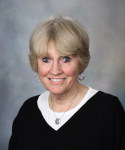
I am pleased to introduce our most recent guest to the CJSM podcast: Aynsley Smith, RN, PhD of the Mayo Clinic.  She is the lead author of a new General Review in our September 2017 issue: Concussion In Ice Hockey: Current Gaps and Future Directions in an Objective Diagnosis.

Dr. Smith and the Mayo Clinic have been at the forefront of research into the prevention, diagnosis and management of concussion in ice hockey.  The Mayo Clinic has hosted three semi-annual ‘ice hockey concussion summits,’ the most recent having just taken place at the end of September

It’s probably always a good time to talk about concussions in ice hockey, but perhaps never better than the start of the NHL season  [my hometown Columbus Blue Jackets open their season tonight!]

In our conversation, Dr. Smith and I cover a lot of ground:  old time Stanley Cup drama, fighting, promising new developments in objective diagnoses, and the potential for rules changes and more to minimize the risk in this exciting, fast-moving contact sport.

The review is open access — which means it’s freely available.  So….subscribe to the CJSM podcast on iTunes, or go directly to our website for a listen to the conversation I had with Aynsley.  And then get the article itself for your weekend reading.