The power of exercise + the power of the internet = #PEPA16

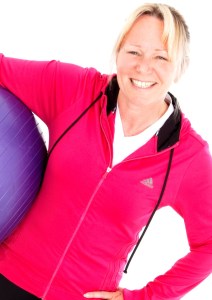
1- Ann Gates Gym Ball (3)

Ann Gates a.k.a. @exerciseworks

I have a lot to share this morning, but I am writing an intro to a guest blog post…and so I shall be brief.

I’ve got ‘exercise on the brain’ of late.  We’re only three weeks away from the beginning of the American College of Sports Medicine (ACSM) Annual Meeting and the coincident 7th World Congress on Exercise is Medicine taking place in Boston, which I’ll be attending.  Here at CJSM, we just released our May issue which features a couple of highly discussed research studies:  a meta-analysis on physical activity and the risk of lung cancer and an RCT on the effect of rock climbing on low back pain.

And to top it off, I’ve ‘met’ Ann Gates, founder and CEO of Exercise Works, aka @exerciseworks for those of you, like me, who have followed that Twitter handle for years. Last week I noticed on that feed an announcement that Exercise Works would hold a MOOC this summer — ‘Physiotherapy, Exercise and Physical Activity’ #PEPA16. And it starts July 4 2016.

What is a MOOC you say? What exactly will go on in #PEPA16?

Let’s hear from Ann.

________________________________________________________________

#PEPA16? It sounds like a rock group… but it’s a mission.

It’s a passion. It’s an opportunity to support health care professionals interested in exercise medicine and disease: from Africa to Afghanistan, doctors to community outreach workers, and to embed physical activity into making every contact count, every consult.

So what’s a MOOC, and what’s happening this summer? A MOOC is a massive, open online, course run by expert educational organizations (in this case Physiopedia). It’s also a unique opportunity to learn, participate, contribute, engage, and share on a global scale! The excitement of it all is that the course has been designed and evaluated to deliver high quality learning outcomes on the role of physical activity in health. It provides a global, level playing field, to gain knowledge on the health benefits of exercise and chronic disease prevention and treatment. It’s also the final part (phew!) of my three year project to change the way we educate health care professionals in prevention medicine (in this case using exercise as a medicine).

I set out in 2014, to disrupt the way in which physical activity medical education is delivered. I wanted most of all to open up the opportunities to all, and to deliver learning and implementation science of physical activity opportunities, into everyday patient care. We’ve achieved this for doctors and health care professionals in the UK- but I wanted to take this global, and provide educational support for all, in any country, for any health care professional interested in learning more about the benefits of physical activity in health.

So, #PEPA16 is the result. A global, online, “rocking”, opportunity to care and share the knowledge, that indeed, exercise is best medicine! Join us, this summer, and please register here.

What’s in the #PEPA16 MOOC Resources? Read more of this post

May Day

Unisphere-cc

CJSM: bringing you clinical sports and exercise medicine research, from around the globe

Whether you are celebrating today as International Workers’ Day, running around a May pole, or watching Leicester City try to complete the 5000:1 shot of winning the Premiership, we are sure that today, May 1, can only be a good day:  our third issue of the year has just published.  And this May Day CJSM is full of offerings we’re sure will be of  interest to you.

Two of the articles have a special focus on physical activity as an intervention for medical conditions — one is a meta-analysis from Chinese colleagues finding a protective effect for physical activity against lung cancer, and the other is a prospective, single-blinded, randomized clinical trial looking at rock climbing as an intervention in the treatment of low back pain. This study is from Austria, and had positive findings for dependent measures of disability (the Oswestry Disability Index), a physical examination maneuver, and even the extent of disc protrusion on MRI.  We’re proud to publish these high quality studies from across the globe.

We are also proud to contribute to the growing body of literature on the effectiveness of “Exercise is Medicine.” Read more of this post

Getting Published & Peer Review

IMG_4953

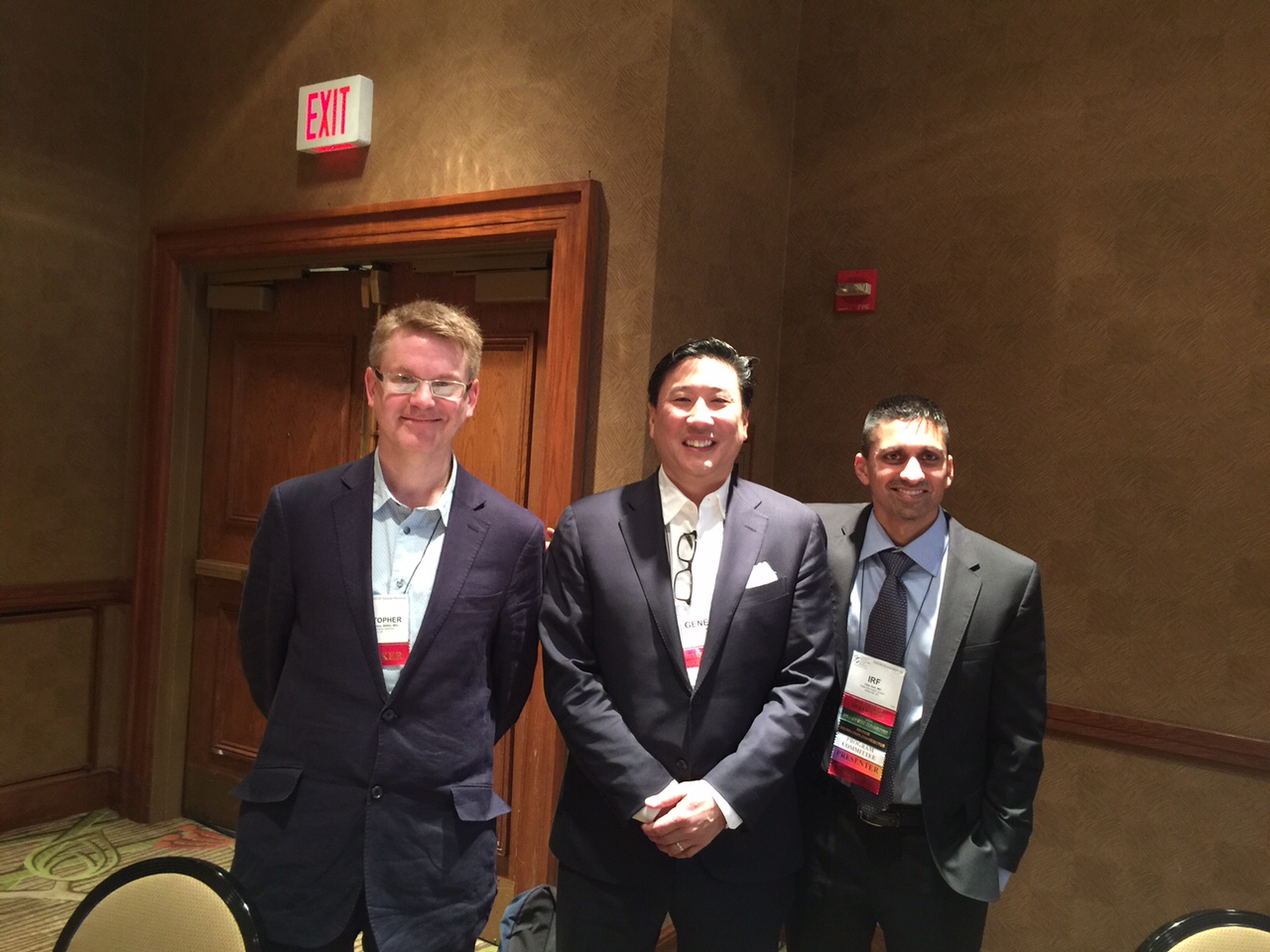
Journal editors (L to R): Chris Hughes (CJSM), Eugene Hong (BJSM), Irfan Asif (Sports Health)

This weekend I’ve been catching up after the week I spent catching up after the recent American Medical Society for Sports Medicine (AMSSM) conference in Dallas saw me catching up with colleagues from around the globe.

‘Catching up’ after ‘catching up’ after ‘catching up’–does that sound like your life too?

Well, at last I have the time to compose some thoughts I have been meaning to share since I returned from Dallas, and they are focused on the session at AMSSM our journal held conjointly with BJSM and Sports Health: “Faculty Development: Getting Published in Sports Medicine Journals.”

For the attendees of the live event, I think it was a very useful panel discussion among the editors from three of the premiere journals in our profession.  Our instructions for authors are available on-line, but it was a rare opportunity for anyone contemplating sending us a manuscript to hear our Editor in Chief Chris Hughes talk about the submission process.  He and his colleagues on the panel, Drs. Asif and Hong,  gave insightful advice on how to choose which journals one might want to approach with a completed manuscript. The nuances of uploading a work and associated content to editorial manager were also discussed; and there were several questions and answers about the transit of a work through the peer review phase of things.  All in all, from the comments I heard during and after the event, the session was well received.

For many of you who couldn’t be there live, I’m happy to say that CJSM’s parent company, Wolters-Kluwer, is offering a couple of resources Read more of this post

Hello Dallas!

IMG_2058

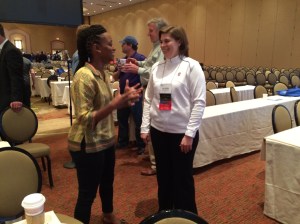
Current president of the South African Sports Medicine Association (SASMA) Phathokuhle Zondi (L) & AMSSM member Alison Brooks enjoying Dallas

I’m in Dallas for the annual American Medical Society for Sports Medicine (AMSSM) scientific conference, and I would typically be sharing a photo of the town in this post.  There is the small problem of a veritable tsunami of rain doing its best to keep me indoors.

I have no complaints.

AMSSM is celebrating its 25th year, and it has every reason to pat itself on the back.  The conference it’s putting on right now (hashtag: #AMSSM16) is so well put together that I am quite happy I do not have a pleasant, sunny day tempting me to head outdoors.  I’d much rather be inside catching all the proceedings.

Among the especially interesting aspects of the conference are the research and case study abstracts being presented both in poster-form and as podium lectures.  Our on-line version of the March 2016 issue has these abstracts available and there is some very interesting sports medicine information to be found there.  I am actually presenting a case on spinal muscular atrophy in a high school runner later this afternoon, and I’ve been listening to some other very interesting talks all through the day.

IMG_2060

The AMSSM “Wall of Honor,” giving a shout out to so many of the members who have contributed to the organization’s success

The keynote talks are emphasizing the all-important value of collegiality in our profession, and I couldn’t agree more. Read more of this post